UK Rapid EV Charging Costs Reach 82p per kWh – What Drivers Need to Know
7 November 2026 | Motor Bridge UK Motoring News
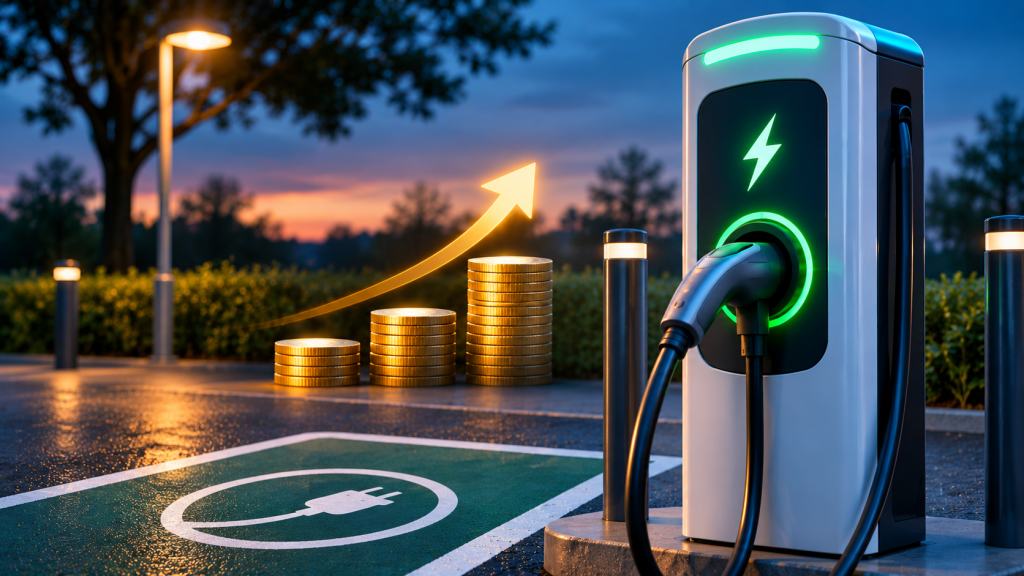
The average cost of using rapid and ultra-rapid public electric vehicle chargers in the UK reached 82p per kilowatt-hour (kWh) in October 2026, according to the latest figures reported by EV charging information provider Zapmap.
The figures, published in November, highlight the substantial difference between the cost of rapid charging and slower public charging facilities.
For motorists who regularly travel long distances or rely on public chargers, choosing where to recharge can have a significant effect on running costs.
However, charging prices vary between networks, locations and payment methods, meaning drivers may still be able to find cheaper alternatives.
How Much Does Public EV Charging Cost in the UK?
According to Zapmap’s October 2026 charging price data, weighted average pay-as-you-go prices were:
| Charging type | Average price |
|---|---|
| Standard and standard-plus charging (3–49kW) | 54p/kWh |
| Rapid and ultra-rapid charging (50kW and above) | 82p/kWh |
These are national weighted averages, not fixed prices charged by every operator.
Zapmap’s figures also indicate that rapid and ultra-rapid charging prices increased by approximately 8% over the preceding 12 months, compared with approximately 2% for standard public charging.
For the latest available figures, visit Zapmap’s UK Public Charging Price Index.
What Does 82p per kWh Mean for EV Drivers?
Electric vehicle charging is generally priced according to the amount of electricity delivered, measured in kilowatt-hours.
The more electricity added to the vehicle, the higher the charging cost.
Using the reported October 2026 national average prices, the estimated costs would be:
| Electricity added | Standard charging at 54p/kWh | Rapid charging at 82p/kWh |
|---|---|---|
| 20kWh | £10.80 | £16.40 |
| 30kWh | £16.20 | £24.60 |
| 40kWh | £21.60 | £32.80 |
| 50kWh | £27.00 | £41.00 |
| 60kWh | £32.40 | £49.20 |
These examples illustrate electricity costs at the stated rates. Actual bills may vary because of operator tariffs, additional charges and charging-related factors.
For example, adding 50kWh at the average standard charging rate would cost £14 less than purchasing the same amount at the average rapid charging rate.
However, slower charging is not always practical, especially during long-distance journeys.
Why Is Rapid EV Charging More Expensive?
Several factors can influence the prices charged by public rapid charging operators.
Higher-Powered Charging Equipment
Rapid and ultra-rapid chargers require specialist electrical equipment capable of delivering substantial amounts of electricity in a relatively short period.
Installation, maintenance and infrastructure costs can be considerable.
Electricity and Network Costs
Charging operators must account for electricity purchasing, grid connections and associated network expenses.
These costs can differ between locations.
Operating Expenses
Public charging facilities may incur land rental, maintenance, payment-processing and customer-service costs.
These expenses can influence the price motorists pay.
Different Pricing Models
Charging networks operate different commercial pricing structures.
Some offer discounted rates through subscriptions, mobile applications or off-peak charging periods.
These factors help explain why charging prices vary, although they do not establish precisely what caused the latest reported increase.
Can Drivers Find Cheaper Rapid EV Charging?
Yes. Public charging tariffs can vary significantly between operators.
Zapmap’s October 2026 figures indicate that pay-as-you-go prices across ten leading rapid and ultra-rapid charging networks ranged from approximately 51p to 93p per kWh.
For a 40kWh charging session, the difference between those prices would be £16.80.
However, the cheapest charging point is not necessarily the most convenient.
Drivers should consider:
Charger availability and reliability.
Connector compatibility.
Charging speed.
Distance from their intended route.
Applicable payment methods and additional fees.
Some networks also offer discounted charging through memberships or off-peak tariffs.
For further information, visit Zapmap’s rapid charging price information.
Find Nearby EV Charging Points with Motor Bridge UK
Planning where to charge can help motorists identify suitable facilities before travelling.
Motor Bridge UK provides a free EV Charge Finder designed to help drivers locate public electric vehicle charging points across the UK.
The tool allows motorists to search for charging locations and explore available information about charging facilities.
Whether planning a long-distance journey or looking for a charging point near a destination, drivers can use the tool to identify potential options.
Find EV Charging Points Near You
Motor Bridge UK – EV Charge Finder
Charging prices, availability and other details can change. Motor Bridge uses third-party charging information, which may not always contain current prices or live availability.
Always confirm important information directly with the charging operator before travelling or starting a charging session.
Is Charging an Electric Car at Home Still Cheaper?
For many electric vehicle owners, charging at home remains considerably cheaper than relying on public rapid charging.
Domestic electricity prices depend on the household’s electricity tariff, supplier and charging arrangements.
Some energy providers offer dedicated EV tariffs with discounted rates during specified off-peak periods.
The following examples illustrate how costs can differ.
| Electricity rate | Illustrative cost for 40kWh |
|---|---|
| Home charging at 8p/kWh | £3.20 |
| Home charging at 26p/kWh | £10.40 |
| Standard public charging at 54p/kWh | £21.60 |
| Rapid public charging at 82p/kWh | £32.80 |
The home electricity rates are illustrative examples, not guaranteed tariffs. These calculations exclude home charger installation costs, standing charges and other potential expenses.
Not every motorist has access to a driveway or suitable home charging facilities.
For drivers living in flats or properties without private parking, public charging may be their primary way of powering an electric vehicle.
This can result in substantially higher electricity costs than those paid by drivers who can charge at home.
Is Rapid EV Charging More Expensive Than Petrol or Diesel?
Whether an electric vehicle costs less to run than a petrol or diesel equivalent depends on several factors.
These include the vehicle’s efficiency, electricity prices, fuel prices and charging habits.
Based on representative electric vehicle efficiency assumptions, Zapmap estimates that its October 2026 average public charging prices equate to approximately:
16p per mile using standard and standard-plus public charging.
24p per mile using rapid and ultra-rapid public charging.
An electric vehicle charged exclusively at expensive public rapid chargers may have energy costs comparable to, or higher than, certain efficient petrol or diesel vehicles.
However, electric vehicle owners who primarily charge at home or use discounted tariffs may achieve significantly lower energy costs.
A fair comparison should account for the individual vehicle and the prices actually paid.
Five Ways UK Drivers Could Reduce Public EV Charging Costs
1. Compare Different Charging Networks
Do not assume every rapid charger charges the same rate.
Comparing prices before travelling can help motorists identify more affordable options.
2. Consider Slower Charging When Practical
Standard charging facilities may be more economical when leaving a vehicle parked for several hours.
They can be suitable during shopping trips, overnight stays or longer visits.
3. Check for Off-Peak Discounts
Some charging networks offer cheaper electricity during quieter periods.
Drivers should check whether discounts require a particular payment method, account or mobile application.
4. Review Subscription Options
Motorists who regularly use public charging may benefit from discounted membership tariffs.
However, any potential savings should be compared with subscription fees.
5. Plan Charging Stops Before Travelling
Planning ahead can help drivers identify suitable charging facilities along their intended route.
Consider charger compatibility, charging speed, accessibility and the latest available prices.
Motor Bridge UK’s EV Charge Finder can help drivers identify potential charging locations.
What Does This Mean for the Future of Electric Motoring?
The latest charging price figures highlight an important challenge facing electric vehicle drivers in the UK.
While public charging infrastructure continues to develop, the difference between home charging and some public charging tariffs remains substantial.
For motorists who rely entirely on public charging, electricity costs may form a significant part of their overall motoring expenses.
However, national averages do not represent the prices available at every charging location.
Competition between charging networks, discounted tariffs and improvements in charging infrastructure may create opportunities for lower costs.
For drivers, the important consideration is understanding how, when and where their vehicle is charged.
Motor Bridge UK: Helping Drivers Make Smarter Charging Decisions
As electric vehicle use continues to grow across Britain, understanding charging options and potential costs is becoming increasingly important.
Motor Bridge UK provides practical motoring information and helpful tools designed to support motorists.
Our EV Charge Finder helps drivers identify charging locations when planning journeys or looking for nearby facilities.
Looking for an electric vehicle charging point?
Find Nearby EV Charging Points – Motor Bridge UK
For the latest official charging price analysis, visit Zapmap’s UK Public Charging Price Index.
Important Information
This article is provided by Motor Bridge UK for general motoring information and public awareness.
The charging figures are based on Zapmap’s October 2026 weighted average pay-as-you-go data, reported in November 2026.
National averages do not represent guaranteed charging tariffs. Prices vary between operators, locations and payment methods.
Illustrative calculations may exclude parking charges, idle fees, additional operator charges and other applicable costs.
Motor Bridge UK is an independent motoring information service and is not affiliated with or endorsed by Zapmap or any charging network mentioned.
Charging information provided through Motor Bridge UK’s EV Charge Finder may be incomplete or outdated. Always verify charging prices, availability and compatibility with the relevant operator.
Motor Bridge UK — Bridging the gaps to smarter motoring.