Diesel Nearly 30p More Expensive Than Petrol: What’s Happening to UK Fuel Prices?
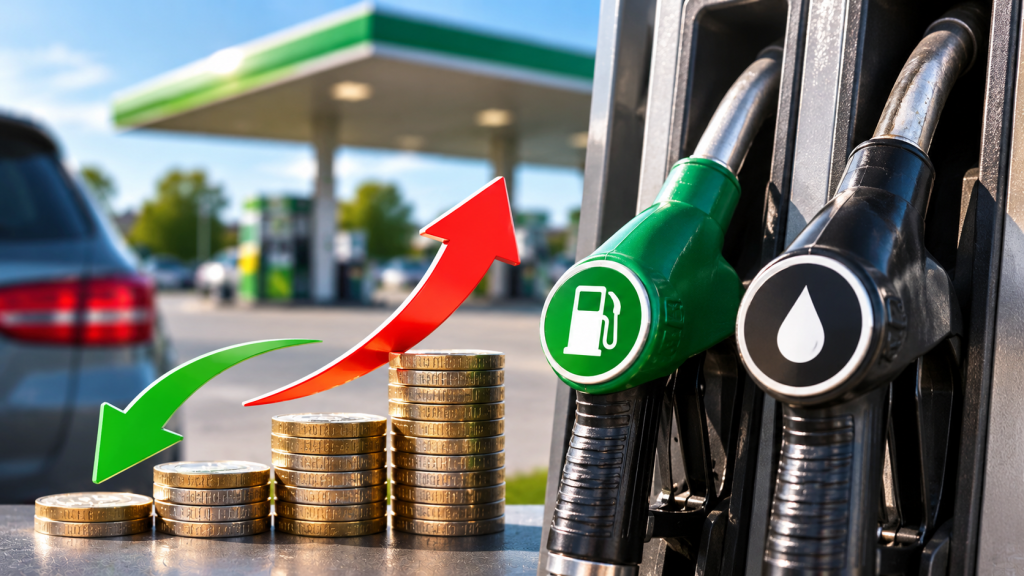
UK motorists are continuing to face significant differences between petrol and diesel prices, with diesel costing almost 30p more per litre at the pumps.
While petrol prices have started to fall from their October highs, diesel prices have been slower to follow, leaving diesel vehicle owners paying considerably more for every fill-up.
For motorists who rely on diesel vehicles for commuting, long-distance journeys or business use, the difference can quickly add up.
But why is diesel so much more expensive than petrol, and what can drivers do to reduce their fuel costs?
Motor Bridge UK examines the latest figures, explains what’s behind the price difference and explores how motorists can find more competitive fuel prices.
UK Petrol and Diesel Prices: November 2026
According to analysis published by British Fuel Prices on 3 November 2026, using information from the UK Government’s Fuel Finder scheme, average UK prices were:
| Fuel type | Average price per litre |
|---|---|
| Unleaded petrol (E10) | 171.5p |
| Diesel (B7) | 198.7p |
| Difference | 27.2p |
Source: British Fuel Prices, 3 November 2026, based on reported Fuel Finder data to 1 November 2026.
These figures represent national averages rather than prices at every individual forecourt.
For an example vehicle with a 55-litre fuel tank, the difference works out at approximately £14.96 per full tank.
Over ten equivalent fill-ups, that would represent a difference of around £149.60.
However, it’s important to recognise that petrol and diesel vehicles can have different fuel consumption rates. The comparison illustrates the pump-price difference for the same number of litres rather than the total running costs of two vehicles.
Motorists can review the government’s official fuel price statistics through the GOV.UK weekly road fuel prices publication.
Petrol Prices Are Falling Faster Than Diesel
The latest figures suggest that petrol and diesel prices are not falling at the same rate.
British Fuel Prices reported that:
- Petrol had fallen approximately 3.4p per litre from its early-October peak.
- Diesel had fallen approximately 1.6p per litre from its October peak.
- The difference between the two fuels had widened to 27.2p per litre.
This means diesel drivers have experienced a smaller reduction in average pump prices than petrol drivers over the same period.
The government’s separate weekly fuel price statistics also show a substantial gap.
For the week beginning 26 October 2026, the Department for Energy Security and Net Zero recorded average prices of 174.07p for petrol and 199.22p for diesel.
That represented a difference of 25.15p per litre.
The difference between the government’s weekly figures and independent daily averages reflects their different reporting dates and calculation methods.
Motor Bridge Insight: National averages help identify trends, but the price available at your nearest filling station may be significantly higher or lower.
Why Is Diesel More Expensive Than Petrol?
There isn’t one single explanation for the difference.
Fuel prices are influenced by international supply and demand, refining costs, exchange rates, transport costs and retail competition.
Several factors are particularly important for diesel.
1. Greater Pressure on International Diesel Supplies
Diesel is widely used across several industries.
As well as powering cars and vans, it is essential for many heavy goods vehicles, agricultural machines and commercial operations.
Demand for related refined petroleum products also affects the wider international market.
When supplies become constrained or demand increases, wholesale diesel prices can rise more sharply than petrol prices.
The Competition and Markets Authority (CMA) identified tighter global refining capacity relative to demand for diesel-related products in its 2026 road fuel monitoring work.
The CMA’s official road fuel market monitoring update provides further information about the market pressures affecting UK motorists.
2. The UK Relies on Imported Diesel
The UK does not produce enough diesel domestically to meet all its requirements.
As a result, imported supplies play an important role in meeting demand.
This can expose UK diesel prices to international market conditions, including changes in overseas refining capacity, transport costs and supply disruption.
Petrol and diesel therefore do not necessarily experience identical wholesale price movements.
3. Global Events Affect Refined Fuel Costs
International developments can affect crude oil and refined fuel markets.
Disruption to production facilities, shipping routes or international trade can increase uncertainty and place upward pressure on costs.
During 2026, geopolitical developments and supply disruptions have contributed to volatility in international fuel markets.
However, it would be misleading to attribute the current petrol–diesel difference to one event alone.
The final price motorists pay reflects several interacting factors.
4. Seasonal Demand Can Influence Diesel Prices
Diesel belongs to a broader group of refined petroleum products known as middle distillates.
Demand for related products, including certain heating fuels, can increase during colder periods.
This can place additional pressure on refining capacity and supply.
Seasonal demand is one possible influence on diesel prices, although it does not independently explain every movement at UK filling stations.
5. Wholesale Price Changes Take Time to Reach Forecourts
Motorists may notice that pump prices do not immediately fall when wholesale fuel prices decrease.
Retailers purchase fuel through supply arrangements that can create a delay between wholesale and retail price movements.
The RAC’s explanation of UK fuel pricing describes how wholesale prices, exchange rates, international markets and retail pricing influence the cost of filling up.
A fall in wholesale prices therefore does not guarantee an immediate or equivalent reduction at every forecourt.
Is Fuel Duty Responsible for the Diesel Price Difference?
No. Standard road petrol and diesel currently attract the same rate of UK fuel duty.
As of 3 November 2026, the main fuel duty rate for both standard unleaded petrol and road diesel is 52.95p per litre.
This means the substantial difference between petrol and diesel pump prices is not caused by a higher fuel duty rate on standard diesel.
VAT also applies to both fuels, although the amount of VAT included in the final price increases when the underlying fuel price is higher.
What Did the October 2026 Budget Change?
The government’s Budget announcement on 28 October 2026 confirmed that the temporary 5p fuel duty reduction would remain in place until 1 July 2027.
This extended the existing reduction rather than introducing an immediate additional cut at the pumps.
The government also deferred the planned inflation-linked increase until July 2027.
Further details are available in the official Budget 2026 government document.
Motor Bridge Insight: Fuel duty is an important part of the overall pump price, but differences in wholesale costs and supply conditions are more relevant when explaining why diesel currently costs substantially more than petrol.
What Does the Diesel Price Gap Mean for Everyday Drivers?
The financial impact depends on how much fuel a motorist uses and the prices available locally.
Consider a driver purchasing 50 litres of fuel.
At the national average prices reported above:
| Fuel | Example cost for 50 litres |
|---|---|
| Petrol | £85.75 |
| Diesel | £99.35 |
| Difference | £13.60 |
For someone who regularly travels long distances, the difference in fuel prices can become particularly noticeable.
However, it is important not to assume that a petrol vehicle will automatically cost less to operate.
A diesel vehicle may use fewer litres over a particular journey, depending on the vehicle, engine, road conditions and driving style.
A fair running-cost comparison should consider:
- Actual fuel economy.
- Annual mileage.
- Fuel prices.
- Maintenance costs.
- Vehicle tax and other ownership expenses.
The pump price alone does not establish which vehicle is cheaper to own or operate.
Why Do Petrol and Diesel Prices Vary Between Filling Stations?
Although national averages provide a useful indication of market conditions, individual forecourt prices can vary.
A filling station’s prices may be influenced by:
Location
Urban, rural and motorway locations may face different operating costs and levels of competition.
Local competition
A station close to several competing forecourts may price differently from a business with fewer nearby competitors.
Retailer operating costs
Staffing, property, transport, supply arrangements and other business costs can influence pricing.
Fuel purchasing arrangements
Retailers may obtain fuel through different suppliers and commercial agreements.
Pricing decisions
Ultimately, individual retailers determine their own pump prices.
This means drivers should not assume the nearest filling station is necessarily the cheapest.
Motorway Fuel Prices Can Be Particularly High
Motorway service stations can charge more than other forecourts.
According to separate British Fuel Prices analysis published on 3 November 2026, motorway diesel averaged approximately 216.8p per litre using data to 1 November, compared with approximately 198.3p at other forecourts.
That represents a difference of around 18.5p per litre.
For a 50-litre purchase, the difference would be approximately £9.25.
These are averages, and individual prices will vary.
For drivers planning a longer journey, comparing suitable fuel stops before travelling may help reduce costs.
However, any potential saving should be balanced against the extra distance, time and fuel required to reach an alternative station.
How Can UK Drivers Find Cheaper Petrol and Diesel?
One practical way to manage fuel costs is to compare reported prices before filling up.
The UK Government introduced its Fuel Finder scheme to make reported forecourt prices more accessible to motorists.
Under the scheme, fuel retailers are required to report fuel price changes within 30 minutes.
The information can then be used by participating third-party services to help drivers compare fuel prices.
The government explains the scheme in its official GOV.UK Fuel Finder information.
Compare Nearby Fuel Prices With Motor Bridge UK
Motor Bridge UK’s Fuel Finder helps motorists explore nearby filling stations and compare reported prices.
Using fuel price information supplied through the UK Government’s Fuel Finder service, the tool allows drivers to search using their location or a UK postcode or town.
Depending on the available information, users can:
- Search for nearby filling stations.
- Compare reported petrol and diesel prices.
- Sort results by distance or price.
- Filter by forecourt type and available amenities.
- Review available station information.
- Identify suitable alternatives before travelling.
Looking for a more competitive fuel price near you?
Use the Motor Bridge UK Fuel Finder to compare reported prices at nearby filling stations.
Find Nearby Petrol & Diesel Prices — Motor Bridge UK
Fuel prices and station information are supplied by third parties and may change. Reported prices are not guaranteed to reflect the price currently charged at the pump. Always confirm the displayed price before purchasing.
Five Practical Ways to Reduce Your Fuel Costs
Although motorists cannot control international oil markets, there are practical steps that may help reduce everyday fuel expenditure.
1. Compare Prices Before Filling Up
Even a small difference per litre can become meaningful over repeated fill-ups.
For example, finding fuel that costs 5p per litre less would save £2.50 on a 50-litre purchase.
Comparing suitable local stations can be particularly useful for drivers who regularly use the same route.
2. Consider the Cost of Travelling to a Cheaper Station
The cheapest advertised fuel is not necessarily the cheapest overall option.
Driving several additional miles to save a small amount per litre may cancel out the benefit.
Consider both the price difference and the additional journey required.
3. Keep Your Tyres Correctly Inflated
Incorrect tyre pressures can affect vehicle efficiency, handling and tyre wear.
Check pressures when the tyres are cold and use the manufacturer’s recommended settings.
4. Drive Smoothly and Anticipate Road Conditions
Unnecessary harsh acceleration and braking can increase fuel consumption.
Maintaining an appropriate speed, anticipating traffic conditions and driving smoothly may help improve efficiency.
Always prioritise road safety and comply with speed limits.
5. Plan Fuel Stops Before Long Journeys
Planning ahead can reduce the likelihood of needing an expensive or inconvenient emergency fuel stop.
Before setting off, consider your route, remaining fuel range and suitable places to stop.
Motor Bridge UK’s Fuel Finder and Smart Journey Resting Place Planner can help motorists explore available options.
Motor Bridge Tip: Don’t focus exclusively on the lowest advertised price. Consider location, opening hours, fuel compatibility and whether the savings justify any additional travelling.
Will Diesel Prices Fall?
Future pump prices will depend on several factors.
These include global fuel supply, international demand, wholesale prices, exchange rates and retail pricing decisions.
If wholesale diesel costs decrease and those reductions pass through to the retail market, motorists may see lower prices.
However, there is no guarantee of when this will happen or how quickly individual retailers will respond.
The current difference between petrol and diesel prices should therefore not be treated as a reliable prediction of future prices.
Motorists can monitor changing national trends through the government’s weekly road fuel price statistics.
Frequently Asked Questions
Why is diesel nearly 30p more expensive than petrol?
The difference reflects a combination of wholesale fuel costs, international supply and demand, refining capacity and market conditions.
Both fuels currently attract the same standard UK fuel duty rate.
How much more does a tank of diesel cost?
Using the reported national averages of 171.5p for petrol and 198.7p for diesel, purchasing 55 litres of diesel costs approximately £14.96 more than purchasing the same quantity of petrol.
This does not account for differences in vehicle fuel efficiency.
Are diesel prices above £2 per litre?
Some UK filling stations are charging more than £2 per litre for diesel.
However, the national average in the figures cited for this article was slightly below that level.
Prices vary between locations and can change throughout the day.
Is petrol cheaper than diesel everywhere?
Not necessarily.
While the national average petrol price is significantly lower, prices vary between stations.
A particular petrol station and diesel station may display different prices depending on location and retailer.
Does fuel duty cost more on diesel?
No.
The standard road fuel duty rate was 52.95p per litre for both standard petrol and diesel on 3 November 2026.
How often are UK fuel prices updated?
Under the government’s Fuel Finder scheme, retailers must submit price updates within 30 minutes of a change.
This does not mean every station must change its price every 30 minutes.
Prices can remain unchanged for several days.
There can also be delays or errors in submitted data.
Where can I compare fuel prices near me?
Motorists can use the Motor Bridge UK Fuel Finder to compare reported prices and explore nearby filling stations.
Final Thoughts: Comparing Fuel Prices Matters More Than Ever
With diesel costing almost 30p more per litre than petrol in the figures examined, UK motorists are continuing to experience significant differences at the pumps.
Although petrol prices have eased from their October highs, diesel drivers have seen smaller reductions.
International supply conditions, refining costs and wholesale market movements continue to influence what drivers pay.
Motorists cannot control these wider market factors, but comparing local prices and planning fuel stops can help them make more informed decisions.
At Motor Bridge UK, we believe drivers should have access to clear information and practical tools that make everyday motoring easier.
Whether you’re filling up for your daily commute, preparing for a family journey or planning a longer trip, checking nearby prices before travelling may help reduce unnecessary costs.
Find More Competitive Fuel Prices Near You
Don’t assume your nearest filling station offers the lowest price.
Use the Motor Bridge Fuel Finder to explore reported petrol and diesel prices and compare suitable forecourts.
Compare UK Fuel Prices — Motor Bridge Fuel Finder
Motor Bridge UK — Bridging the gaps to smarter motoring.
Official Information and Sources
The following sources were used to research this article.
UK Government — Weekly Road Fuel Prices
Official national average petrol and diesel prices published by the Department for Energy Security and Net Zero.
View Official UK Fuel Price Statistics
UK Government — Fuel Finder
Information about the government’s fuel price reporting scheme and access to forecourt price data.
Read About the Government Fuel Finder Scheme
Competition and Markets Authority — Road Fuel Market Monitoring
Government analysis of competition, wholesale costs and fuel retailer pricing.
Read the CMA Fuel Market Update
UK Government — Budget 2026
Official information about fuel duty and changes announced in October 2026.
Read the Government’s Budget 2026 Document
British Fuel Prices — 3 November 2026
Independent analysis of government Fuel Finder data reporting the 27.2p per litre petrol–diesel price difference.
Read the November 2026 Fuel Price Analysis
Important Information
This article provides general information about UK road fuel prices and market conditions as of 3 November 2026.
National average prices are based on published data and do not represent guaranteed prices at individual filling stations.
Fuel prices may change without notice. Information supplied through the UK Government’s Fuel Finder scheme is reported by participating fuel retailers and may be subject to reporting delays, omissions or inaccuracies.
Motor Bridge UK does not set or control fuel prices and cannot guarantee that any particular station will offer the lowest available price.
Drivers should confirm fuel type, price, opening hours and other relevant information directly with the forecourt before purchasing.
Any cost comparisons or potential savings in this article are illustrative and depend on individual circumstances.
Motor Bridge UK is an independent motoring information platform and is not affiliated with or endorsed by the UK Government, the Department for Energy Security and Net Zero or the Competition and Markets Authority.
Published: 3 November 2026
Motor Bridge UK — Bridging the gaps to smarter motoring.