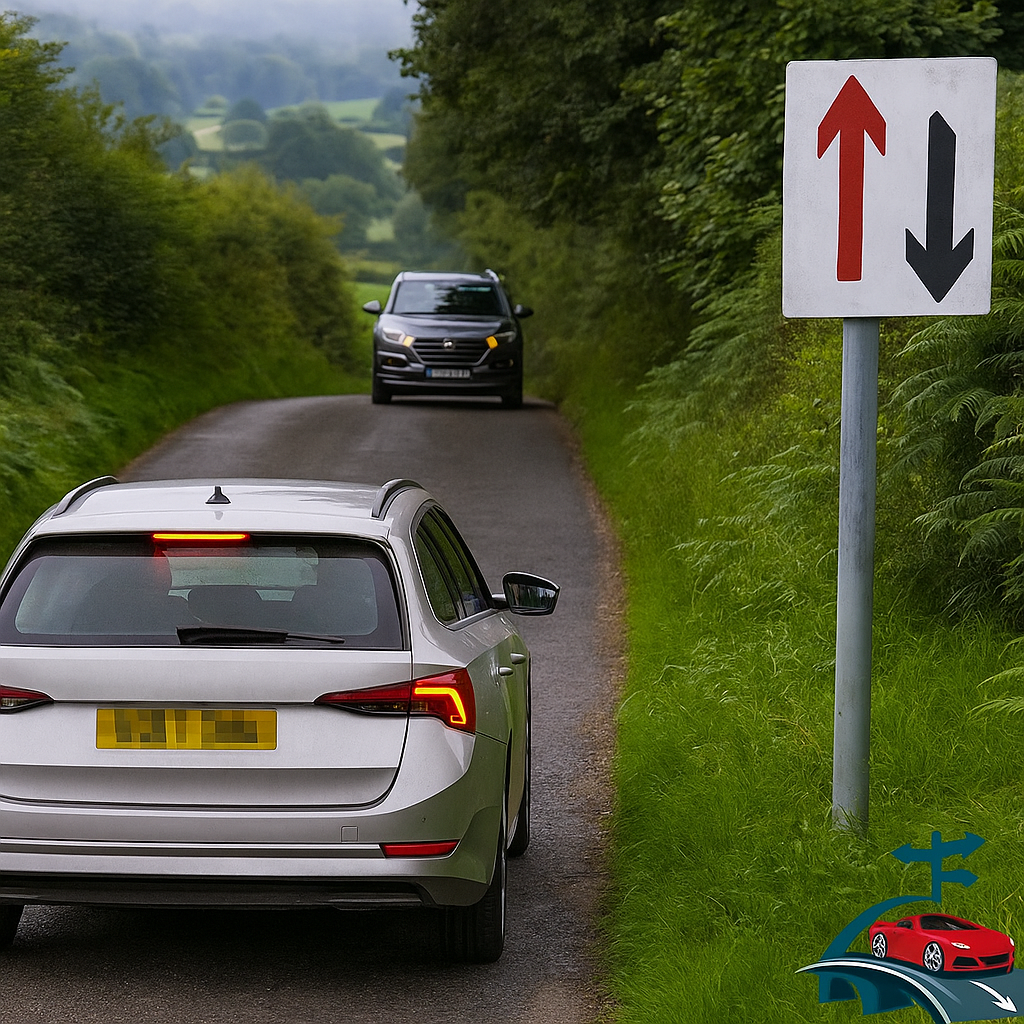
When it comes to driving safely, many motorists are well aware of common rules such as speed limits, stop signs, and seatbelt regulations. However, one Highway Code rule that is frequently overlooked is Giving Way to Traffic Coming Uphill. Despite its simplicity, this guidance plays an important role in helping prevent accidents, easing traffic flow, and improving road safety, particularly on narrow roads and rural routes.
The Rule: Highway Code 155
The Highway Code explicitly addresses this scenario under Rule 155, which covers single-track roads.
The rule advises drivers to give way to road users coming uphill whenever possible. If necessary, drivers should reverse to a suitable passing place to allow an approaching road user to pass.
This guidance may seem minor, but it is rooted in practical road sense. Uphill vehicles, especially larger or heavily loaded ones, can face greater difficulty when stopping and restarting on steep gradients. Expecting a vehicle ascending a hill to stop unnecessarily can create difficult situations, including stalled vehicles or an increased risk of collisions.
Importantly, Rule 155 provides guidance rather than granting vehicles travelling uphill an automatic legal right of way. Drivers must always consider the circumstances and prioritise safety.
Why This Rule Matters
The principle behind Giving Way to Traffic Coming Uphill is simple: vehicles moving uphill may require more effort to restart once they stop. Gravity works against them, and larger vehicles, such as buses, lorries, or delivery trucks, can be particularly disadvantaged. A fully loaded truck that stops mid-hill may struggle to regain momentum, potentially rolling backwards if the driver cannot maintain control.
By giving way when it is safe and practical, drivers heading downhill can help maintain traffic flow and reduce unnecessary risks. On narrow country roads and steep single-track routes, allowing uphill traffic to pass can help prevent difficult situations where vehicles become unable to pass one another.
This small courtesy is not just a matter of etiquette but of road safety and practical driving strategy.
Challenges with Uphill Traffic
Driving uphill involves several challenges. Vehicles may require more engine power to maintain speed, while slippery or loose road surfaces can make traction more difficult. When a driver has to stop midway, restarting on a steep gradient can be challenging — particularly for manual transmission vehicles.
Stalling or rolling backwards can endanger both the uphill driver and vehicles behind them. This is one reason the Highway Code advises Giving Way to Traffic Coming Uphill whenever possible on single-track roads.
For larger vehicles, such as lorries, buses, or vehicles towing trailers, the difficulty can be amplified. These vehicles may carry considerable weight, accelerate more slowly and require additional space to manoeuvre safely.
By allowing uphill vehicles to continue where safe and practical, drivers travelling downhill can make a valuable contribution to safe driving practices.
Practical Tips for Motorists
Assess the road conditions – On narrow or single-track roads, anticipate the possibility of an uphill vehicle approaching and look ahead for suitable passing places.
Communicate effectively – Make your intentions clear through safe positioning and appropriate use of indicators where necessary. Avoid using headlights or hand signals in ways that could confuse other road users or be interpreted as an instruction to proceed.
Choose safe reversing points – If necessary, reverse carefully to a suitable passing place, but only when it is safe to do so. Check for pedestrians, cyclists, other vehicles and potential hazards before manoeuvring. Never reverse further than necessary.
Be patient – Uphill traffic may move more slowly, particularly on steep or narrow roads. Anticipating this can reduce frustration and promote courteous driving.
Observe larger vehicles – Buses, lorries and vehicles towing trailers may require extra space and time to navigate steep gradients safely.
Statistics and Observations
Official road casualty statistics do not routinely identify incidents caused specifically by drivers failing to follow Highway Code Rule 155.
However, narrow rural roads can present particular challenges where visibility, limited passing places, steep gradients and restricted road widths make it difficult for approaching vehicles to pass safely.
Drivers who fail to give way to traffic coming uphill when it is safe and appropriate to do so may increase the likelihood of difficult manoeuvres or potentially hazardous situations.
Observing the guidance can help motorists avoid unnecessary delays and reduce the risk of conflict between approaching road users.
Beyond the Highway Code: A Question of Courtesy
Following Rule 155 is not just about understanding the Highway Code; it is also a matter of driver courtesy.
Consider the additional effort required for a fully loaded van, lorry or bus to restart on a steep incline.
By Giving Way to Traffic Coming Uphill whenever possible, downhill drivers can contribute to smoother traffic flow, reduce unnecessary stress for other road users and demonstrate responsible driving.
It is important to remember that the Highway Code distinguishes between rules that are legal requirements and those that provide guidance. Rule 155 uses advisory wording, and drivers should always consider what is safe and practical in the circumstances.
Small actions like these can contribute to a more considerate and safety-conscious driving environment.
Uphill Driving in Modern Context
With the increasing number of electric vehicles (EVs) and hybrid cars on UK roads, the way vehicles handle steep gradients can vary.
EVs generally handle gradients well due to the immediate torque available from their electric motors. However, vehicle weight, road conditions, tyre grip and the available traction can still affect their ability to stop and restart safely on a hill.
Fully loaded vehicles, particularly delivery vans, buses and larger commercial vehicles, may face additional challenges regardless of whether they are powered by electricity, petrol or diesel.
The principle of Giving Way to Traffic Coming Uphill remains just as relevant, reminding all drivers that cooperation, anticipation and appropriate road positioning are important for safe and smooth traffic movement.
Conclusion
Although it may be one of the less frequently discussed parts of the Highway Code, Giving Way to Traffic Coming Uphill (Rule 155) is an important consideration when driving on single-track roads.
Understanding the practical reasons behind this guidance — particularly the challenges faced by larger, heavier or slower-moving vehicles — helps drivers appreciate why allowing uphill traffic to continue can be beneficial.
By following the guidance whenever it is safe and practical, motorists can help reduce unnecessary risks, contribute to smoother traffic flow and promote a culture of courtesy and responsible driving.
At Motor Bridge, we encourage all drivers to familiarise themselves with these often-overlooked Highway Code rules. Knowledge and anticipation are key to safer, smarter motoring.
Remember, the next time you’re heading downhill on a narrow or single-track road, allowing an approaching vehicle travelling uphill to pass — where safe and practical — could help prevent a difficult situation and make the road safer for everyone.