
National Highways: What Do They Do?
Who looks after England’s motorways and major A roads? National Highways operates, maintains and improves the strategic road network. Discover what its traffic officers do, where to check closures, and what to do if something goes wrong on your journey.
This guide covers England. Scotland, Wales and Northern Ireland have separate road authorities and traffic services.
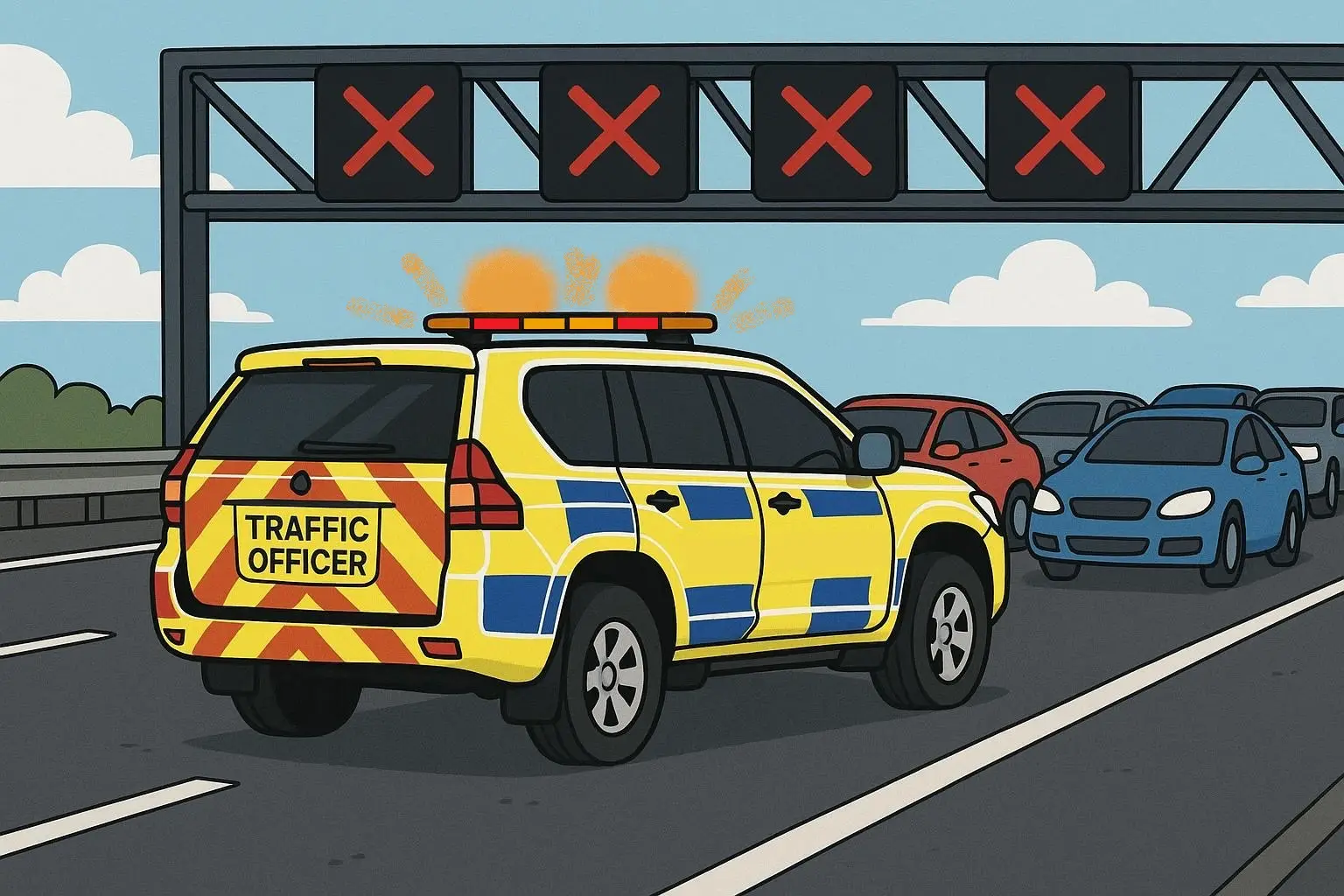
What National Highways actually does
Looks after key roads
Operates and maintains England’s motorways and selected major A roads, including inspections, repairs and improvement programmes.
Traffic officers
Traffic officers help manage incidents, protect road users and coordinate with police and emergency responders. They are not a replacement for emergency services.
Monitors conditions
Uses traffic control centres, cameras, signs and traffic data to help manage congestion, hazards and incidents.
Plans works and closures
Organises maintenance and planned roadworks, and publishes advance closure information to help drivers plan.
Did you know? The busiest small slice of England’s roads
More than two-thirds of lorry miles in England were driven on this network in 2025. That is not the same as two-thirds of all freight by weight.
Source: Department for Transport, 2025 traffic estimates (published 30 September 2026).
What would you do? Tap a situation to find out
These quick scenarios explain what the signs and services actually mean.
A red X appears above my motorway lane
The lane is closed. Move safely to an open lane in accordance with the signs. You must not drive in a lane displaying a red X, even if you cannot see the hazard. See Highway Code rule 258.
The motorway sign shows 50 in a red circle
This is a mandatory maximum speed limit. Do not exceed 50 mph while it applies; also follow any lower limit applicable to your vehicle and conditions. An advisory speed (shown differently) is not the same as a mandatory red-ringed limit.
I need to check a closure before leaving
Check National Highways planned full closures and live travel updates. Plans can change at short notice: recheck before setting off.
My car breaks down on a motorway
If possible, leave at the next exit or reach a service area or emergency area. Follow Highway Code rules 275–287 on stopping safely, hazards, leaving the vehicle when safe and contacting help. If stranded in a live lane or in immediate danger, call 999 when safe. Do not attempt to repair the car in a live lane.
Find the right information — not just a phone number
Planned closures
Look up upcoming full motorway and major A-road closures in England before a journey.
Current travel conditions
Check live incidents, delays and traffic information using the official travel pages.
Non-emergency enquiries: National Highways customer contact centre: 0300 123 5000. For immediate danger or serious injury, call 999 instead. Do not browse these pages or use your phone while driving.
Do National Highways manage every road?
No. National Highways manages the strategic road network in England, not every A road and not ordinary local streets. Most other roads are the responsibility of local highway authorities. Scotland, Wales and Northern Ireland have their own road management arrangements.
For a pothole or obstruction, use the relevant highway authority’s official reporting service rather than assuming National Highways is responsible.
Explore the signs: small symbol, big meaning
Red X — lane closed
Never continue in a lane showing a red X. Follow the earlier signs and merge safely.
Variable speed limit — 50
A number inside a red ring is a legal maximum speed limit while the sign applies.
Illustrations are simplified educational icons, not replacements for official road signs. Always follow the signs displayed on the road.
Watch National Highways explain its work
See how National Highways helps manage England’s motorways and major A roads.
Video: National Highways · Watch on YouTube
More useful things to explore on Motor Bridge UK
The links above lead to existing hub pages; a more specific solution or tool link can be substituted once its live destination has been verified.
National Highways FAQs
Is National Highways the same as the police?
No. National Highways traffic officers manage traffic and support safety on the strategic road network; police retain their own law-enforcement and emergency responsibilities.
Do traffic officers tow or repair broken-down vehicles?
Traffic officers may help protect a scene and arrange appropriate assistance, but they are not a standard commercial repair or breakdown recovery service. You may still need your own breakdown provider.
Does National Highways cover Scotland, Wales or Northern Ireland?
No. Its remit is England’s strategic road network. Use the appropriate traffic information service for each other UK nation.
Can I use the hard shoulder as a normal lane?
Only when signs explicitly indicate it is open to traffic. Otherwise do not use it as a running lane. Follow the road signs and the Highway Code.
Do National Highways closure times ever change?
Yes. Planned works can be changed, postponed or cancelled, including due to weather or operational needs. Check the official closure report near the time of travel.
Official references & important information
Information checked against the Department for Transport’s 2025 road traffic estimates, the Highway Code and National Highways official travel information. Relevant sources: DfT traffic figures, motorway rules, breakdown rules, and closure reports.
This independent educational guide is not affiliated with or endorsed by National Highways or the Department for Transport. It is not live emergency advice, a substitute for road signs, or a guarantee of traffic conditions. In an emergency, contact 999. Always follow official instructions.
About this Motor Bridge UK guide: Motor Bridge UK provides independent, general motoring information to help visitors understand their options. We are not National Highways, a government agency or an emergency service. Information may change and should not replace the Highway Code, current road signs, official travel updates or professional advice. External websites are operated by their respective organisations; inclusion does not imply endorsement. Some Motor Bridge UK service pages may feature clearly identified advertising or referral links.