
Ice scraper & de-icer
Clear your windows completely before setting off.
Winter weather can change quickly. Snow, ice and poor visibility can cause delays or leave you waiting for assistance — even on a familiar trip.
A few useful items in the boot can make an unexpected stop safer and more comfortable. Explore the kit, see what each item is for and get ready before the cold weather arrives.
← Back to UK Motoring Guide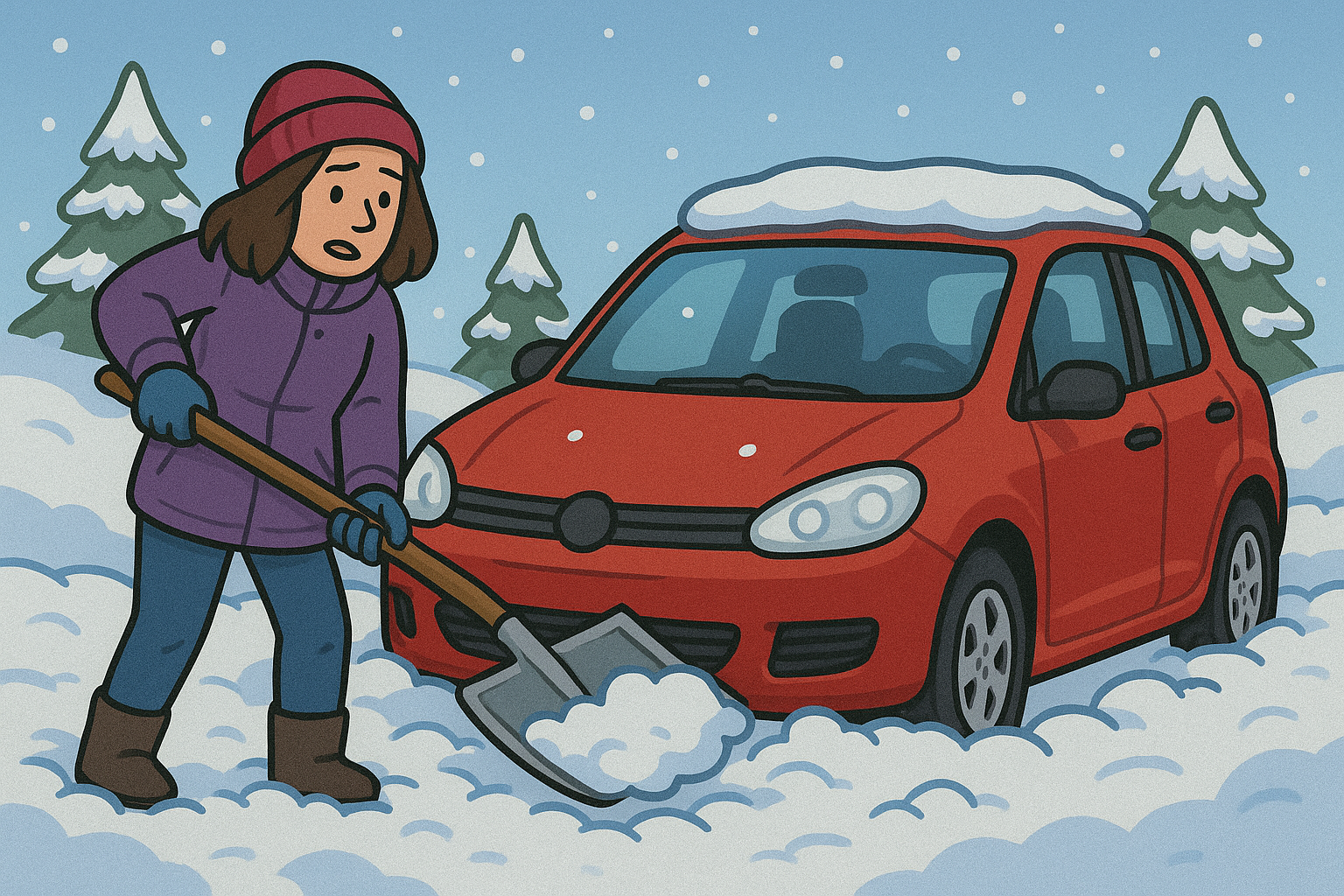
Here are the useful items from Motor Bridge's original winter checklist. Tap an arrow to see why each one matters.
Clear your windows completely before setting off.
Keep one somewhere you can reach it easily.
A torch helps you see during a dark breakdown; check the batteries before winter.
Keep your phone charged so you can call for help.
Keep basic supplies readily available and check expiry dates.
Useful for a flat 12V battery, but only if you know the correct procedure for your vehicle.
Helpful for clearing snow around a stationary vehicle when it is safe to do so.
Keep sealed water and food that stores well, particularly for long journeys or remote roads.
Warm layers help you stay comfortable if heating fails or you face a long wait.
Use washer fluid suitable for freezing weather; it helps prevent the washer system freezing but does not replace de-icing the glass.
These may help with traction on some snow-covered surfaces.
A compact blanket can help you retain warmth during a delay.
Know before you go.
See and be seen.
Give your car the best chance.
Prepare for the unexpected.
Try these everyday winter situations. Open each card to see a sensible next step.
A quick winter reality check.
Your safety comes first.
Do not rush a jump-start.
Highway Code Rule 228 advises you not to drive in icy or snowy conditions unless the journey is essential. If you must travel, slow down, take care and allow extra time.
Rule 229 says you must be able to see clearly. Make sure windows, mirrors, lights and number plates are clear, and remove snow that could fall from the vehicle.
From checking tyres to repairing faults before a long journey, Motor Bridge helps you explore relevant services and information.
Roadside safety comes first. No checklist can make a dangerous roadside situation safe. Never attempt repairs, vehicle recovery or fitting traction aids where you would be exposed to moving traffic.
Explore Motor Bridge Solutions →Motor Bridge UK Ltd provides general motoring information, not individual safety, legal or mechanical advice. Winter kit items are sensible preparations, not a universal legal requirement for every private car. Conditions and applicable rules can change, and Northern Ireland has its own Highway Code. Always follow official advice and your vehicle manufacturer's instructions. If there is immediate danger or someone is injured, call 999.
Some Motor Bridge Solutions pages may contain clearly identified advertising or affiliate links to third-party providers. Motor Bridge does not carry out the services offered by those providers.
Guidance reviewed: 20 October 2026.