
Taking a Break on a Long Journey
Long journeys demand concentration. A well-planned break helps you stay alert, make better decisions and avoid pushing on when you are no longer fit to drive.
Motor Bridge UK helps you plan smarter stops, understand the Highway Code and recognise when the safest decision is to pause.
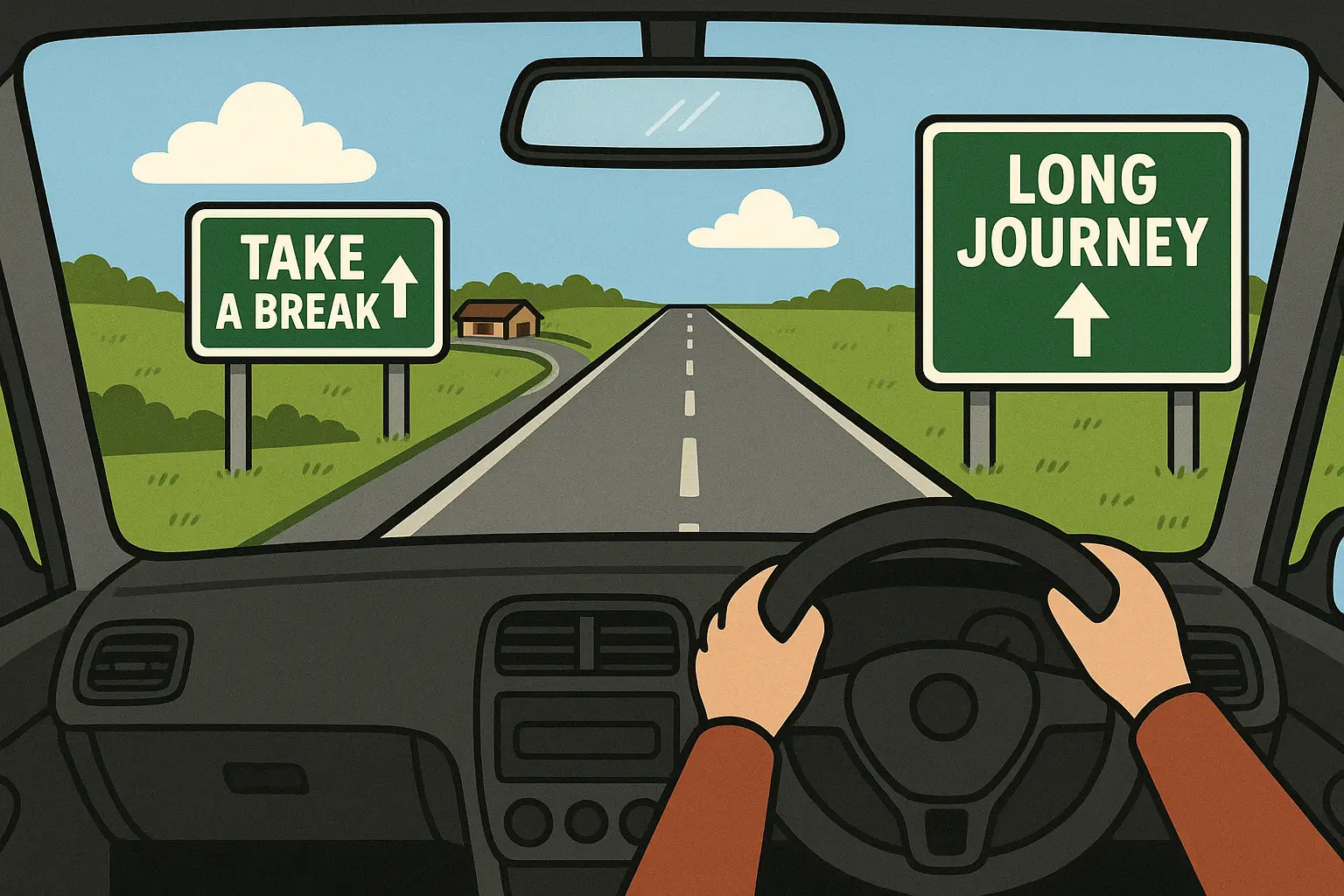
Smarter Motoring Means Knowing When to Pause
Fatigue can affect reaction time, concentration and judgement. Plan pauses into your journey; do not rely on willpower to overcome sleepiness. A driver who knows when to stop is making a safer decision.
The 2-hour rule: what it actually says
Highway Code Rule 91 provides clear guidance for ordinary motorists.
Recommended planning interval: take a break of at least 15 minutes after every two hours of driving, and sooner if you feel tired. This is a recommendation, not a universal legal limit for every driver.
Source: The Highway Code, Rule 91 (GOV.UK).
Six ways to plan a safer break
Tap a card to reveal practical advice you can use on your next trip.
Plan a stop before you start
Choose suitable stopping points as part of your route, rather than deciding only when you feel exhausted. Allow extra time for traffic, charging, meals and passengers.
Take a proper break
The Highway Code recommends at least 15 minutes after every two hours of driving for ordinary motorists. This is advice to help you stay alert, not a universal legal driving-hours limit.
Pick a safe location
Use a proper service area, designated rest stop or other lawful parking place. Do not use a motorway hard shoulder or emergency area for a routine break.
Notice your warning signs
Yawning repeatedly, heavy eyelids, wandering concentration, missing signs or drifting in your lane all mean you should stop safely as soon as possible.
Reset before driving again
Get out of the vehicle, stretch, drink water and assess your alertness. If you remain tired, take a longer rest or arrange another way to travel.
Share the drive when appropriate
If travelling with another suitably licensed, insured and fit driver, swapping can help; both drivers still need adequate sleep and breaks.
Build your own break plan
Use these simple steps before leaving, during the journey and before setting off again.
Get enough sleep. Look up safe stopping places and leave room in your schedule for delays.
Watch for fatigue, plan at least a 15-minute break after two hours and stop sooner if necessary.
Check that you feel alert. If not, rest for longer or make alternative plans.
Myth or fact? Test your journey knowledge
These common assumptions are worth checking before a long drive.
A coffee makes a tired driver safe to continue
False. Caffeine may temporarily improve alertness, but it is not a substitute for sleep. If sleepy, stop safely; a short nap may help, but do not continue unless fit to drive.
I only need a break when I start yawning
False. Plan breaks in advance and stop sooner if warning signs appear. Fatigue can affect judgement before it becomes obvious.
I can pull onto the motorway hard shoulder for a quick nap
False. The hard shoulder and emergency areas are not routine rest stops. Follow the Highway Code and use a suitable stopping place.
A 15-minute stop guarantees I am safe for another two hours
False. The Highway Code recommendation is a minimum planning guide, not a guarantee. You may need a longer stop, sleep or an alternative driver.
What would you do?
Open each real-world situation to reveal a safer response.
It is 90 minutes into your trip and your eyes feel heavy
Do not drive on to reach the planned two-hour mark. Leave the road and stop in a suitable, safe place as soon as possible. Resume only when fit to drive.
Your planned services are closed or full
Continue only if safe and alert, and find another lawful stop. Do not use an emergency refuge or hard shoulder as a convenience stop.
A friend offers to take over but is not insured
Do not allow an uninsured driver to drive. Rest, use an appropriately insured and fit driver, or change your travel plans.
You have a long overnight drive ahead
Consider postponing or splitting the trip. The Highway Code advises avoiding long journeys between midnight and 6am when natural alertness is at a minimum.
Travel tools for a more comfortable journey
Motor Bridge UK tools can help you choose places to stop, find fuel or locate EV charging options. Always plan around road conditions and your vehicle’s needs.
For live decisions, check destination opening times, parking restrictions, charger access and service availability before travelling. A suggested stop is not a guarantee of facilities.
A note for HGV, coach and professional drivers
The Highway Code’s general break recommendation does not replace legally enforceable rules that may apply to commercial driving.
For many regulated goods-vehicle drivers, a qualifying 45-minute break is needed after no more than 4½ hours of driving, subject to the applicable regime and exemptions.
Drivers’ hours, working-time rules and rest periods are not always the same thing. Some breaks can be split only in prescribed ways.
Rules depend on vehicle, journey, operation, location and exemptions. Never treat this page as a tachograph compliance checklist.
Official guidance: Drivers’ hours overview (GOV.UK) and DVSA goods vehicle guidance.
Long-journey FAQs
Short answers to important break and fatigue questions.
How frequently should I stop?
For ordinary drivers, Highway Code Rule 91 recommends a break of at least 15 minutes after every two hours of driving. Stop earlier whenever you need to.
Do professional drivers follow the same break rules?
Not necessarily. Many professional goods and passenger drivers are subject to separate legally enforceable drivers’ hours, rest and working-time rules, depending on vehicle, journey and exemptions. The everyday two-hour recommendation does not replace them.
Is caffeine enough if I am sleepy?
No. It may offer temporary help but cannot replace adequate sleep. A nap of at least 15 minutes is one option mentioned in Highway Code guidance. Allow time to feel fully alert before considering driving again.
Can I stop in an emergency refuge area just to rest?
No. It is for emergencies or breakdowns, not planned breaks. Use a lawful parking area or service area.
Should I always wait until two hours have passed?
No. Two hours is a maximum planning interval for the recommendation, not a target if you feel tired sooner. Stop before then as needed.
What if I feel unwell or extremely sleepy?
Stop safely, avoid continuing until fit to drive and seek appropriate medical advice if symptoms are persistent or unexpected. If a medical emergency occurs, call 999.
In summary: stop before tiredness takes over
Plan breaks at least every two hours, use safe stopping places, stay hydrated, share driving only with someone eligible and fit to drive, and never ignore signs of fatigue.
Remember: getting back on the road is less important than being fit to drive.
Official guidance and further reading
Only official external sources are linked here.
Important information from Motor Bridge UK
Motor Bridge UK provides independent educational motoring information and is not affiliated with GOV.UK, DVSA, the police or any road authority. This guide is general advice, not individual legal, medical, professional driving or transport compliance advice. Applicable rules can change and vary by vehicle, location and use. Always follow current official guidance, road signs and the requirements applying to your journey. External services and facilities may change without notice. No guidance can guarantee safety.