
Motor Bridge UK | UK Motoring Guide
Child and Pet Safety When Travelling
Every passenger deserves a safe journey — whether they're a baby, a growing child or a much-loved family pet.
Using the correct child restraint, securing animals properly and preparing for the journey can help reduce risks, distractions and unnecessary stress.
Explore our interactive guide for practical UK motoring advice, legal requirements and useful safety checks before travelling with children or pets.
← Back to UK Motoring Guide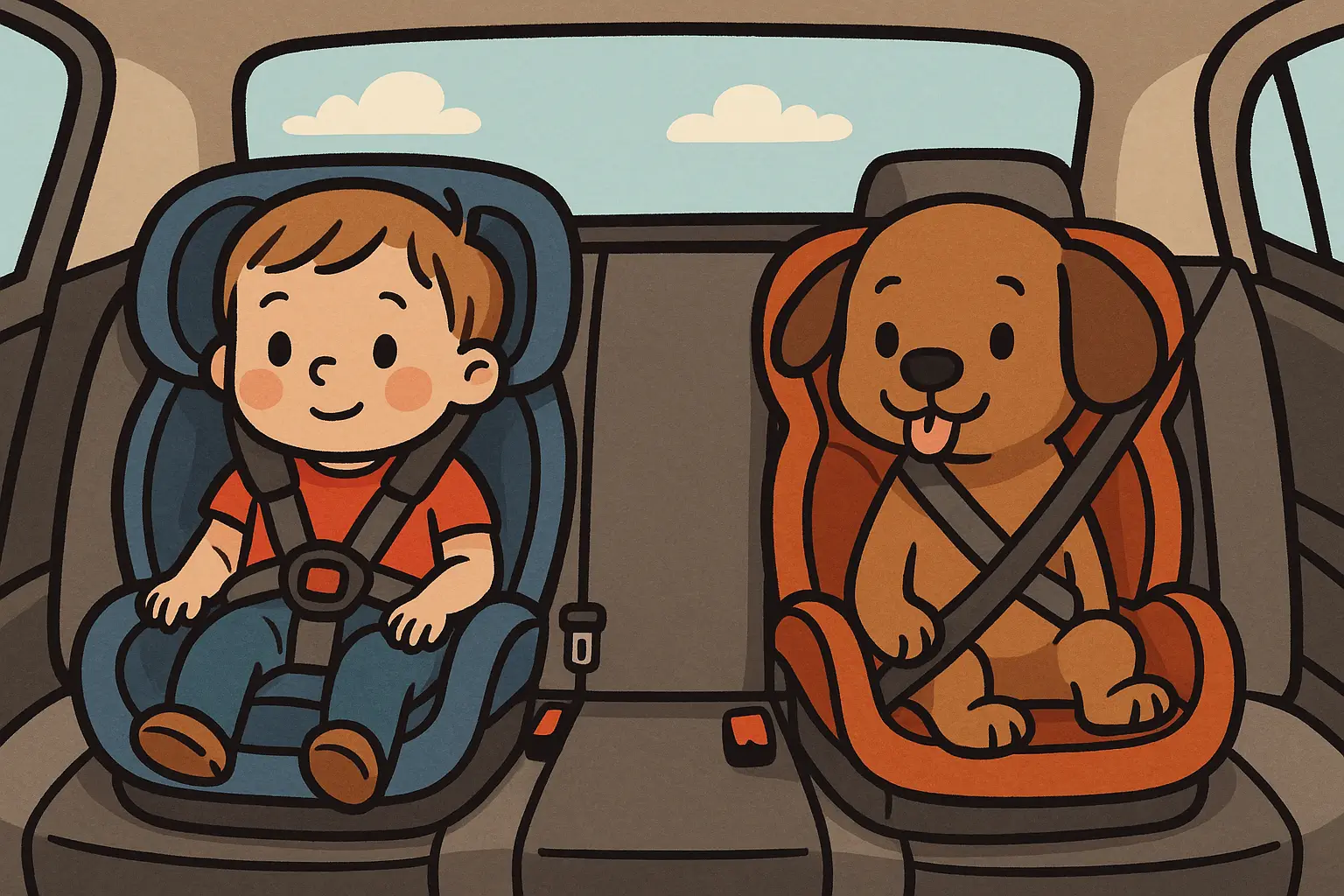
01 | Child passenger safety
Keeping Children Safe in the Car
Children need suitable restraints that match their size and are fitted correctly. Understanding the rules is important, but so is checking that the restraint is being used properly.
Car Seat Requirements
When must a child use a car seat?
In Great Britain, children must normally use an appropriate child car seat until they reach their 12th birthday or become 135cm tall, whichever happens first.
After reaching either threshold, they must use an adult seat belt where required.
There are limited legal exceptions for certain journeys and vehicles.
How do I choose the correct seat?
Choose an approved child restraint suitable for the child's height or weight, depending on its approval standard.
Check that it is compatible with your vehicle and fitted in accordance with the seat manufacturer's instructions.
Approved seats may carry an R129 or ECE R44 approval label. Existing compliant R44 seats can still be used in the UK.
When can a child face forwards?
Under the R129 height-based standard, children must use rear-facing restraints until they are over 15 months old.
The precise requirements depend on the approved seat and its instructions.
Rear-facing travel beyond the legal minimum may provide additional protection, provided the seat is approved for the child's size.
Correct Fitting
How tight should the harness be?
The harness should fit snugly, without unnecessary slack, and follow the seat manufacturer's fitting instructions.
Check the shoulder-strap position, buckle and any required chest positioning.
A poorly adjusted harness can reduce the effectiveness of a child restraint.
Why can bulky coats be a problem?
Thick padded coats can compress in a collision, leaving the harness looser than intended.
Where appropriate, remove bulky outerwear before securing the child and place a blanket over the fastened harness.
Always follow the restraint manufacturer's instructions.
What about passenger airbags?
Never place a rear-facing child restraint in a front passenger seat with an active frontal airbag.
The frontal airbag must be deactivated before fitting a rear-facing child seat in that position.
Always consult the vehicle and child-restraint manufacturers' instructions.
02 | UK child restraint law
Understanding the Legal Requirements
Some child-seat rules are legal requirements, while other advice reflects recommended safety practice. Understanding the difference helps avoid confusion.
Who Is Responsible?
Who must ensure children are restrained?
The driver is legally responsible for ensuring children under 14 use an appropriate child restraint or seat belt where required.
Passengers aged 14 and over are generally responsible for wearing their own seat belts.
Specific exceptions can apply.
Adult Seat Belts
When can children use an adult seat belt?
Children who reach 135cm in height or their 12th birthday, whichever comes first, must normally use an adult seat belt instead of a child restraint.
For smaller children, an approved restraint remains the normal requirement.
Taxis and Private Hire
Are the rules different in taxis?
There are specific exceptions when a suitable child car seat is unavailable in a licensed taxi or private hire vehicle.
Children must travel in the rear seat under those exceptions.
Children aged three or older must wear an adult seat belt. Children under three may travel without one under the specified exception.
Using an appropriate child seat remains the safer choice wherever practicable.
Unexpected Journeys
Can a child travel without a car seat in an emergency?
There is a limited exception allowing a child aged three or older to use an adult seat belt for an unexpected, necessary journey over a short distance when the correct child seat is unavailable.
This is not intended as a routine alternative to using the proper restraint.
Different restrictions apply to children under three.
03 | Pet passenger safety
Keeping Pets Safe on the Road
Pets can become distressed, distracted or injured during a journey. Suitable restraints and thoughtful preparation help protect animals and everyone else travelling in the vehicle.
Suitable Restraints
How should pets be restrained?
Highway Code Rule 57 advises that dogs and other animals should be suitably restrained so they cannot distract the driver or injure themselves or others if the vehicle stops quickly.
Examples include a suitable pet carrier, dog cage, vehicle dog guard or seat belt harness.
Choose equipment appropriate for the animal, vehicle and intended use.
Avoiding Distractions
Why shouldn't pets roam freely?
An animal moving around the cabin can distract the driver or interfere with vehicle controls.
It may also be injured or cause injury during sudden braking or a collision.
Pets should not travel on the driver's lap.
Temperature and Comfort
Can pets be left alone in parked cars?
A parked vehicle can become dangerously hot, including on days that do not feel particularly warm outside.
Never leave an animal in circumstances where it could overheat or suffer distress.
Plan stops and arrangements so pets can remain safe and comfortable throughout the journey.
Safe Journey Planning
What should I prepare for my pet?
Consider drinking water, suitable food, necessary medication, cleaning supplies and comfortable bedding.
Plan opportunities for appropriate breaks and exercise.
Avoid feeding a large meal immediately before travelling if your veterinary professional advises against it.
04 | Before you travel
Make the Journey Comfortable
Long journeys can be tiring for adults, children and pets. Planning ahead can make travelling easier and help avoid unnecessary stops or distractions.
How often should we take breaks?
Plan regular stops at safe, suitable places.
The Highway Code recommends drivers take a break of at least 15 minutes after every two hours of driving.
Babies, children and pets may need more frequent stops depending on their individual needs.
For newborn babies or children with medical needs, follow relevant professional advice about journey duration and positioning.
What should we pack for children?
- Drinks and suitable food.
- Changing supplies where required.
- Any essential medication.
- Appropriate clothing and blankets.
- Age-appropriate entertainment.
- Items needed for comfort during planned stops.
Keep loose items safely stored so they cannot become dangerous projectiles during sudden braking.
What should we pack for pets?
- Fresh drinking water and a suitable bowl.
- Lead, collar or harness and identification.
- Appropriate food and any required medication.
- Waste bags and cleaning supplies.
- A suitable restraint or carrier.
- Comfortable bedding where appropriate.
How can I avoid distractions?
Secure children and pets before moving off.
Arrange snacks, entertainment and other essentials before the journey where possible.
If a passenger or animal needs attention, find a safe place to stop rather than becoming distracted while driving.
Regular breaks, suitable restraints and a comfortable environment can make travelling safer and less stressful.
05 | Common mistakes
Small Details Worth Checking
Some of the most useful safety improvements are simple checks that can be overlooked during a busy journey.
Child Seat Installation
Can a seat appear secure but be incorrectly fitted?
Yes. A seat may appear secure while still being installed incorrectly.
Check the manufacturer's instructions, seat belt routing or ISOFIX connections, and any required support leg or top tether.
If you're unsure, seek a competent child-restraint fitting check.
Second-Hand Car Seats
Are second-hand seats safe to use?
Be cautious about using a child seat if its history is unknown.
Damage may not always be visible, particularly after a collision.
Check the manufacturer's guidance, approval label, instructions and whether the seat has been involved in an accident.
Pet Harnesses
Will any pet harness provide crash protection?
Not necessarily. Pet restraints vary in design and performance.
Look for suitable products with credible independent testing where available and check their intended purpose.
A restraint designed to control movement may not offer the same crash protection as one designed and tested for vehicle travel.
Vehicle Loading
Can luggage create additional risks?
Yes. Loose luggage and equipment can move during braking or a collision.
Store heavier items securely and avoid placing loose objects where they could strike passengers.
Make sure luggage does not interfere with child restraints, pet protection systems or the driver's view.
06 | Interactive knowledge check
What Would You Do?
Three everyday situations. Choose your answer and open the card to discover the guidance.
These scenarios are educational exercises rather than a formal safety assessment.
Scenario 1: A Child Has Outgrown Their Seat
A child is getting taller, and their current restraint is approaching its stated height limit.
A. Keep using it because the child is comfortable
A child restraint must remain suitable for the child's size and be used within the manufacturer's stated limits.
B. Check the approved limits and choose a suitable replacement
Check the seat's height or weight limits, approval and fitting instructions.
Choose an appropriate replacement before the current restraint becomes unsuitable.
C. Use an adult seat belt regardless of the child's size
Children must normally use an appropriate child restraint until reaching 135cm or their 12th birthday, whichever comes first.
Scenario 2: Your Dog Wants to Sit in the Front
Your dog repeatedly tries to climb onto your lap while you're driving.
A. Allow it because the dog is calm
An animal can distract the driver even when usually calm.
Sudden braking may also cause injury.
B. Stop safely and secure the dog appropriately
Find a safe place to stop and use a suitable restraint before continuing.
Highway Code Rule 57 advises that animals should be suitably restrained.
C. Hold the dog in place with one hand
Driving one-handed to restrain an animal can interfere with vehicle control and does not provide suitable protection.
Scenario 3: A Rear-Facing Child Seat in the Front
You need to install a rear-facing child restraint in the front passenger seat.
A. Leave the frontal airbag active
A rear-facing child restraint must not be used in front of an active frontal airbag.
B. Deactivate the frontal airbag and follow fitting instructions
Deactivate the frontal airbag before fitting a rear-facing child seat in the front passenger position.
Follow the vehicle and restraint manufacturers' instructions.
C. Place the child seat sideways
Child restraints must be installed only in approved seating positions and orientations, following the relevant instructions.
07 | Quick questions
Things Parents and Pet Owners Ask
Child Car Seats
Is ISOFIX always necessary?
No. Some approved child restraints are installed using vehicle seat belts, while others use ISOFIX.
What matters is using an approved, compatible restraint that is installed correctly.
Children in the Front
Are children allowed in front passenger seats?
Children can travel in the front passenger seat when the applicable restraint and airbag requirements are met.
However, rear seats are generally recommended for children where suitable seating and restraints are available.
Pet Travel Anxiety
What if my pet becomes distressed?
Plan breaks and help your pet become accustomed to travelling gradually where possible.
If distress is severe or persistent, seek veterinary advice about suitable management.
Do not administer medication intended to calm an animal without appropriate veterinary guidance.
Long Journeys
Should we plan extra stops?
Yes. Children and animals may require more frequent breaks than the driver.
Plan stops based on individual needs and the journey conditions.
Always stop somewhere safe and suitable before attending to passengers or animals.
08 | Before you set off
Your Family Travel Checklist
A practical reminder for journeys with children and pets. Tick the items that apply to your journey.
Selections are temporary and are not submitted or saved by this guide.
09 | Official guidance
Check the Official UK Guidance
For the detailed legal requirements and exceptions, consult the official government guidance.
Child car seat requirements
GOV.UK explains child restraint requirements, approved seats, fitting rules and the main legal thresholds.
Read official child car seat guidanceExceptions to child car seat rules
Includes information about taxis, unexpected journeys, different vehicles and other specific circumstances.
Read official exceptions guidanceSeat belts and driver responsibility
The Highway Code and GOV.UK explain seat belt responsibilities and child-restraint requirements.
Read official seat belt guidanceTravelling with animals
Highway Code Rule 57 explains the importance of suitably restraining dogs and other animals in vehicles.
Read official animal restraint guidance