Euro 7 Emissions Rules Are Coming to the UK — Will Your Current Car Be Affected?
New Euro 7 vehicle emissions standards are heading to Great Britain, bringing changes to how new cars, vans and other vehicles are approved for the road. But will existing petrol and diesel vehicles be affected, and could drivers face new restrictions or unexpected costs?
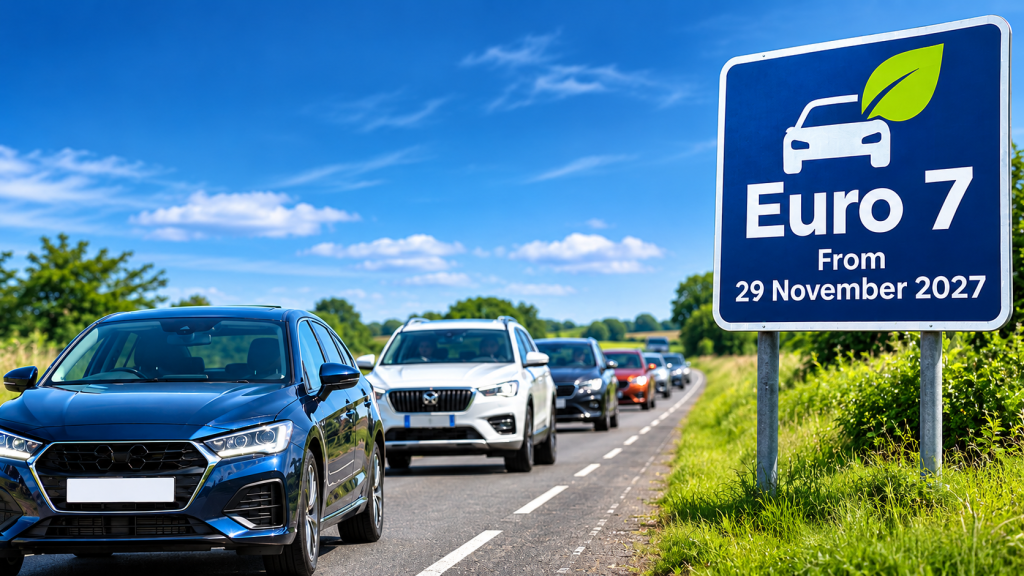
The UK government has confirmed plans to introduce Euro 7 emissions standards for new vehicles, with the main changes for newly registered cars and vans expected from 29 November 2027.
The announcement follows a Department for Transport consultation and represents another step towards reducing pollution from road transport.
However, motorists who already own a petrol or diesel vehicle should not panic.
Euro 7 does not mean existing vehicles must suddenly meet the new standard, and it does not introduce a requirement for owners to replace their current cars.
Here’s what UK drivers need to know.
What Are Euro 7 Emissions Standards?
Euro emissions standards are regulations designed to control harmful pollutants produced by road vehicles.
They set limits and testing requirements for pollutants such as nitrogen oxides (NOx) and particulate matter, which can contribute to poor air quality.
Previous standards, including Euro 4, Euro 5 and Euro 6, have progressively introduced stricter requirements for newly approved vehicles.
Euro 7 builds on these regulations, but the changes go beyond exhaust emissions.
For the first time, the new framework also introduces requirements covering pollution from brake wear and tyre abrasion, alongside provisions for electric vehicle battery durability.
The aim is to reduce environmental impacts throughout a vehicle’s working life, rather than focusing exclusively on exhaust emissions.
Importantly, Euro 7 does not simply impose dramatically lower exhaust emission limits on every new car.
For passenger cars and light commercial vehicles, many existing Euro 6e pollutant limits are retained, while testing, particle measurement, durability and other requirements are strengthened.
The official proposals and technical background can be found in the Department for Transport’s Euro 7 consultation.
When Will Euro 7 Come Into Force in the UK?
Following its consultation, the Department for Transport confirmed on 27 October 2026 that Great Britain will proceed with adopting Euro 7.
The government intends to introduce the new standard for newly registered, mass-produced cars and vans from 29 November 2027.
The introduction will take place in stages.
| Vehicle category | Planned implementation |
|---|---|
| New car and van registrations (mainstream production) | 29 November 2027 |
| Cars and vans from qualifying small-volume manufacturers | 1 July 2030 |
| Heavy goods vehicles, buses and coaches | Dates subject to further consultation |
| Additional brake and tyre requirements | Phased implementation according to applicable regulations |
The government has decided not to impose a separate mandatory Euro 7 introduction date for newly approved car and van models in Great Britain during November 2026.
This differs from the European Union’s timetable, under which Euro 7 applies to new types of cars and vans from 29 November 2026.
An important distinction: Although the government has confirmed its policy decision, the necessary Great Britain legislation is still being developed. The dates above therefore describe the government’s announced implementation plans rather than requirements already in force.
Further details are available in the official government response published on 27 October 2026.
Will Euro 7 Affect My Current Petrol or Diesel Car?
For most existing vehicle owners, the answer is straightforward.
You will not be required to upgrade your current car to Euro 7 simply because the new standard is introduced.
Euro emissions standards primarily apply when vehicles are manufactured, approved and first registered.
For example, if you currently own a Euro 5 or Euro 6 vehicle, the introduction of Euro 7 does not automatically make it illegal to drive.
Your vehicle remains subject to its applicable roadworthiness, maintenance and emissions requirements.
This means:
You do not automatically need to replace your existing petrol or diesel car.
Your current vehicle does not need to be converted to Euro 7.
Euro 7 does not introduce an automatic ban on driving older vehicles.
Existing MOT obligations continue to apply.
Local clean air zone requirements remain separate considerations.
However, motorists should still ensure their vehicles are properly maintained.
Faulty emissions equipment, excessive exhaust smoke or other defects can affect roadworthiness and may result in an MOT failure.
If you are unsure about previous emissions-related defects or advisories, the Motor Bridge UK MOT Explainer can help you understand recorded MOT results in clearer language.
What Will Actually Change Under Euro 7?
Although Euro 7 is often described as another emissions regulation, several changes make it different from previous standards.
1. Greater Focus on Exhaust Pollution
Euro 7 introduces updated requirements for measuring and controlling exhaust pollutants.
These include improved monitoring of very small particles and stronger requirements for emissions performance throughout a vehicle’s life.
For cars and vans, the framework largely retains the Euro 6e limits for several regulated exhaust pollutants.
However, the testing and durability requirements are designed to provide greater confidence that vehicles continue performing appropriately beyond their initial approval.
For larger commercial vehicles, Euro 7 also introduces strengthened requirements covering several exhaust pollutants.
2. Brake Dust Will Be Regulated
One of the most significant developments concerns pollution from braking systems.
When vehicles brake, friction between components can release tiny particles into the surrounding air.
These particles contribute to non-exhaust pollution.
Euro 7 introduces requirements intended to limit particulate emissions from brake wear.
This is relevant to petrol, diesel, hybrid and electric vehicles.
Electric vehicles do not produce exhaust emissions while driving, but their tyres and braking systems can still contribute to particulate pollution.
The regulations therefore recognise that reducing road transport pollution involves more than changing the fuel used to power a vehicle.
3. Tyre Wear Will Receive Greater Attention
Vehicle tyres gradually wear down through normal driving.
This wear can release particles into the environment.
Euro 7 introduces a framework for regulating tyre abrasion, with requirements being developed and introduced in stages.
The changes are intended to encourage improvements in tyre performance and reduce pollution.
For motorists, maintaining correct tyre pressures, checking tyre condition and replacing excessively worn tyres will remain important.
Drivers looking for tyre replacement and fitting options can explore Tyres & Wheels through Motor Bridge UK.
4. Electric Vehicle Batteries Will Face Durability Requirements
Euro 7 also introduces battery durability requirements for electric vehicles and plug-in hybrids.
These are intended to establish minimum performance expectations over specified periods and distances.
The framework includes requirements for battery health information, potentially making it easier for buyers to understand the condition of a used electric vehicle.
For example, someone purchasing a second-hand electric car may benefit from more consistent information about the battery’s remaining capacity.
Battery condition can influence driving range, performance and the vehicle’s overall value.
Motorists considering an electric vehicle can also use the Motor Bridge UK EV Charge Finder to explore public charging locations and available connector information.
Will Euro 7 Change the MOT Test?
The introduction of Euro 7 does not automatically mean existing vehicles will face an entirely new MOT emissions test.
The new standard primarily concerns vehicle approval and the technical requirements applying to vehicles manufactured under the framework.
Existing MOT testing requirements remain separate.
However, the government has also consulted on strengthening the regulation of emissions from vehicles already in use.
That is a separate policy process and should not be confused with the adoption of Euro 7.
Motorists should continue to ensure that emissions-related components are working correctly, including:
Diesel particulate filters.
Exhaust and catalytic converter systems.
Emissions control equipment.
Engine management systems.
Other components relevant to their vehicle’s emissions compliance.
Removing or unlawfully modifying emissions-control equipment can create legal and roadworthiness problems.
Drivers who notice excessive smoke, warning lights or changes in engine performance should arrange an appropriate inspection.
Motor Bridge UK provides information about garage servicing, repairs and MOT services for motorists looking for maintenance and repair options.
For official information about the separate consultation on vehicles already in use, see GOV.UK’s in-use vehicle emissions consultation.
Will Euro 7 Affect ULEZ and Clean Air Zone Charges?
This is an important question for drivers who regularly enter London or other areas with emissions-based charging schemes.
The introduction of Euro 7 does not automatically change existing ULEZ or Clean Air Zone charging rules.
These schemes operate under their own requirements.
For example, the standard emissions thresholds for many passenger cars in English Clean Air Zones currently include:
| Vehicle type | General minimum standard |
|---|---|
| Petrol cars | Euro 4 |
| Diesel cars | Euro 6 |
| Heavy goods vehicles | Euro VI |
Different requirements can apply depending on vehicle classification, local rules and exemptions.
The arrival of Euro 7 does not mean every Euro 6 diesel car suddenly becomes chargeable.
Likewise, an older petrol vehicle that currently meets the applicable minimum emissions standard does not automatically lose that status.
Nevertheless, local charging policies can change independently of vehicle manufacturing standards.
Before entering a charging zone, drivers should check their vehicle’s eligibility using the relevant official service.
Useful resources include:
GOV.UK — Check Clean Air Zone Charges
Transport for London — Ultra Low Emission Zone
Will Euro 7 Make New Cars More Expensive?
It is possible that the additional engineering, testing and compliance requirements could influence vehicle manufacturing costs.
Manufacturers may need to invest in updated emissions systems, brake technology, monitoring equipment and testing procedures.
However, this does not mean every new vehicle will become more expensive by a specific amount.
Retail prices depend on numerous factors, including production costs, competition, manufacturer pricing strategies and consumer demand.
It would therefore be misleading to suggest that Euro 7 will automatically add a fixed amount to the price of a new car.
Motorists considering changing vehicles should compare the overall cost of ownership rather than focusing exclusively on emissions standards.
Fuel costs, insurance, servicing, depreciation and vehicle suitability can all influence whether a particular model represents good value.
Drivers comparing petrol and diesel running costs can use the Motor Bridge UK Fuel Finder to explore reported prices at nearby filling stations.
What Does Euro 7 Mean for HGVs and Commercial Vehicles?
Euro 7 will also cover heavier commercial vehicles, including trucks, buses and coaches.
However, the government has confirmed that further consultation is required before finalising the implementation dates for heavy-duty vehicles in Great Britain.
The changes are expected to introduce strengthened emissions requirements, additional monitoring and durability provisions.
For fleet operators, these developments may influence future purchasing decisions and vehicle replacement planning.
Transport managers should distinguish between new-vehicle approval requirements and the continuing legal obligations applying to vehicles already in service.
Existing commercial vehicles will not automatically need to be replaced solely because Euro 7 is introduced.
Fleet operators can explore additional support through Motor Bridge UK’s Fleet Services.
Should You Buy a Euro 6 Car or Wait for Euro 7?
For anyone considering purchasing a new or used vehicle, the introduction of Euro 7 raises an understandable question.
Is it worth waiting?
There is no single answer that applies to every driver.
A properly maintained Euro 6 vehicle may continue to provide suitable and economical transport for many years.
Euro 7 could offer benefits through updated emissions technology, improved durability requirements and potentially more consistent battery health information for electric vehicles.
However, waiting for a new emissions standard does not necessarily guarantee a better financial outcome.
Consider the following before making a decision:
Your current vehicle’s condition: A reliable, properly maintained vehicle may remain suitable without immediate replacement.
Your regular journeys: Drivers frequently entering Clean Air Zones should confirm the applicable vehicle standards.
Running costs: Fuel, charging, insurance and maintenance expenses can be more significant than the emissions classification alone.
Future requirements: Rules affecting newly manufactured vehicles should not be confused with restrictions applying to existing vehicles.
Vehicle suitability: Reliability, practicality, accessibility and affordability should remain central to any purchasing decision.
The most appropriate choice depends on your individual circumstances.
Frequently Asked Questions
Is Euro 7 replacing Euro 6 in the UK?
The government has confirmed plans to introduce Euro 7 for newly registered cars and vans in Great Britain from 29 November 2027, subject to the necessary legislation.
Existing Euro 6 vehicles will not automatically become illegal.
Will Euro 7 ban diesel cars?
No. Euro 7 is an emissions and vehicle approval framework, not a ban on existing diesel vehicles.
Separate government policies concerning future zero-emission vehicle sales should not be confused with Euro 7.
Will my current car fail its MOT because of Euro 7?
Not simply because Euro 7 is introduced.
Your vehicle remains subject to the relevant MOT requirements, including applicable emissions checks.
Will Euro 7 apply to electric cars?
Yes. Although fully electric vehicles do not produce exhaust emissions, Euro 7 includes requirements relating to brake wear, tyre abrasion and battery durability.
Do I need to upgrade my car’s emissions system?
Euro 7 does not introduce a general requirement for owners of existing vehicles to retrofit their cars to the new standard.
However, existing emissions equipment must continue to meet applicable legal and roadworthiness requirements.
Will Euro 7 change London ULEZ rules?
Not automatically.
ULEZ operates under separate charging requirements. Drivers should continue using the official Transport for London vehicle checker.
Motor Bridge UK: Helping Drivers Prepare for Changing Motoring Rules
Changes to vehicle regulations can be confusing, particularly when announcements about emissions standards, clean air zones and future vehicle sales appear alongside one another.
The important distinction is that Euro 7 primarily changes the requirements applying to newly approved and registered vehicles. It does not automatically make existing petrol and diesel vehicles unsuitable for UK roads.
For most motorists, the immediate priority remains keeping their current vehicle properly maintained, roadworthy and compliant with the rules that already apply.
Motor Bridge UK brings together practical motoring information, vehicle tools and services to help drivers make informed decisions.
Explore our resources:
MOT Explainer — Understand MOT history, defects and advisories.
Fuel Finder — Explore nearby petrol and diesel prices.
EV Charge Finder — Find public electric vehicle charging locations.
Garage, Servicing, Repair & MOT — Explore vehicle servicing and repair options.
The Bottom Line
Euro 7 represents another step towards improving vehicle emissions standards and reducing pollution from road transport.
For manufacturers, the transition will bring additional technical requirements.
For motorists, the changes may influence future vehicle choices, but they do not mean everyone must replace their current car.
If your existing vehicle remains roadworthy, properly maintained and compliant with applicable regulations, Euro 7 alone is not a reason to stop driving it.
Motor Bridge UK will continue following the legislation and explaining what future changes mean for everyday motorists.
Bridging the gaps to smarter motoring.
Important Information
This article provides general information based on official government announcements available on 5 November 2026. Euro 7 implementation in Great Britain remains subject to the relevant legislation and any subsequent amendments.
Vehicle emissions requirements, MOT rules, Clean Air Zone policies and eligibility exemptions may vary according to vehicle type, location and individual circumstances.
Motor Bridge UK does not provide legal or professional mechanical advice. Drivers should consult official government guidance and qualified professionals where appropriate.
Official references: