
Motor Bridge UK | UK Motoring Guide
Driving at Night: Stay Safe After Dark
Driving at night can make familiar roads surprisingly challenging. Reduced visibility, dazzling headlights, driver fatigue and unexpected hazards all require extra care.
Whether you're commuting, travelling on rural roads or finishing a long journey, preparation and good judgement matter.
Explore our interactive guide to learn how to prepare your vehicle, use your lights correctly and make safer decisions after dark.
← Back to UK Motoring Guide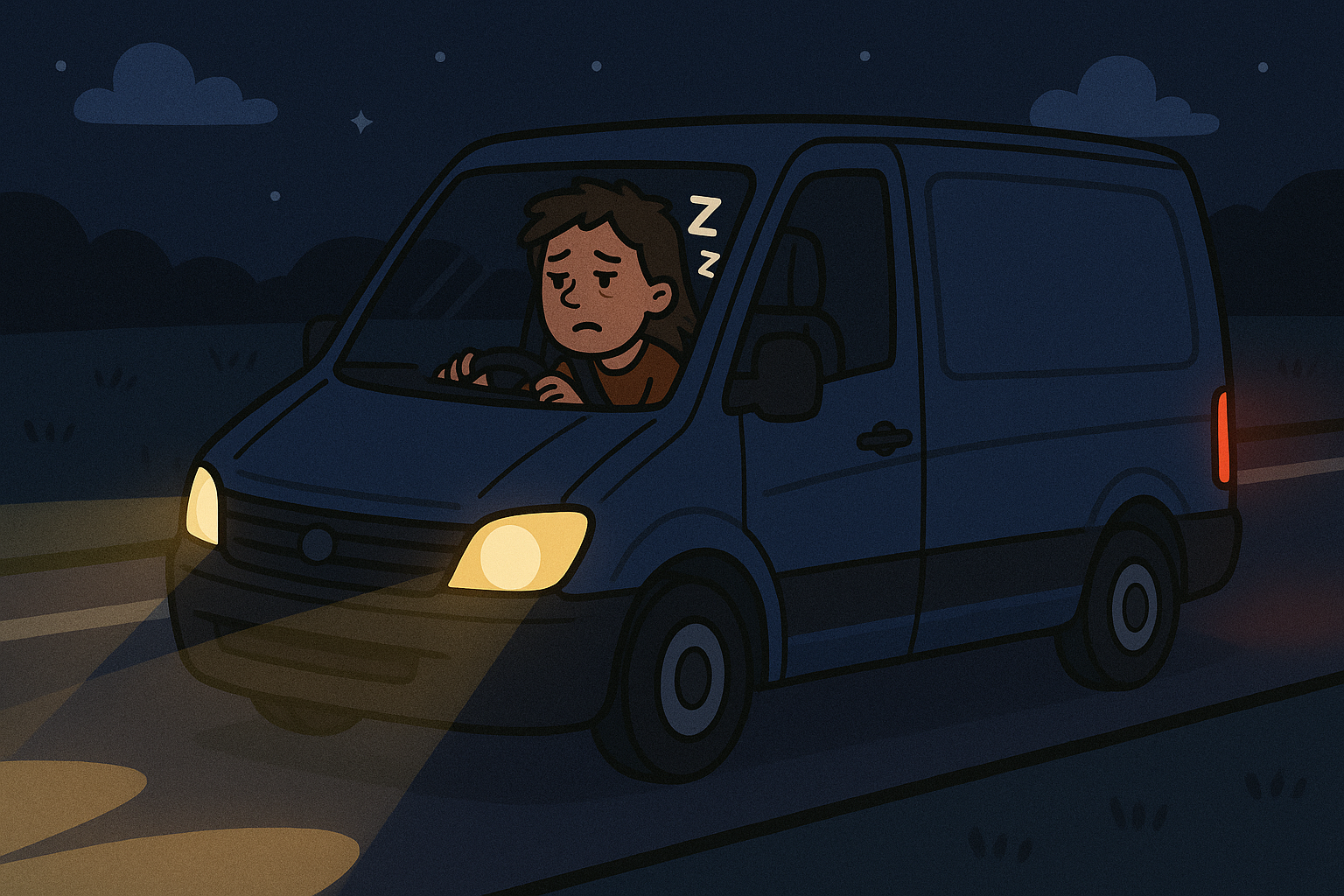
01 | Preparation
Before You Drive Into the Darkness
A few checks before setting off can help prevent problems later. Open each card to explore the essentials.
Vehicle Visibility
Are your headlights ready?
Check dipped and main-beam headlights. Make sure the lenses are clean and the lights are correctly adjusted.
Incorrectly aimed headlights may reduce your view or dazzle approaching road users.
If your vehicle has a headlight-levelling control, follow the manufacturer's instructions when carrying passengers or heavy luggage.
Are your other lights working?
Check your rear lights, brake lights, indicators and number-plate lights.
Remember that daytime running lights do not necessarily illuminate the rear of your vehicle.
Are your windows and mirrors clear?
Smears, dirt and condensation can scatter light and make headlight glare worse.
Clean both sides of your windscreen, check your mirrors and ensure your wipers, washers and demister work correctly.
Driver Readiness
Are you genuinely alert?
Do not begin a journey if you are too tired to drive safely.
The Highway Code recommends avoiding long journeys between midnight and 6am where possible, because natural alertness is generally at its lowest.
If you already feel sleepy, reconsider your journey.
Have you planned your breaks?
Plan suitable stopping places, particularly for long journeys and unfamiliar routes.
The Highway Code recommends a minimum break of at least 15 minutes after every two hours of driving.
Stop earlier whenever necessary.
Is your eyesight suitable for driving?
If you struggle with glare, recognising hazards or seeing clearly in low light, arrange an eyesight examination.
Wear any corrective lenses required to meet legal driving eyesight standards.
If you cannot see adequately to drive safely, do not continue driving.
02 | Vehicle lighting
Know Your Headlights
The correct lights help you see ahead while reducing the risk of dazzling other road users. These four common lighting systems are worth understanding.
Dipped Headlights
When should you use them?
The Highway Code recommends using dipped headlights at night in built-up areas and whenever needed to avoid dazzling others.
Headlights are generally required at night, although specific exceptions exist for certain roads with lit street lighting.
Follow the applicable legal requirements and use dipped headlights when appropriate for safe visibility.
Main Beam
When is full beam suitable?
Main beam can help illuminate dark roads when its use will not dazzle other people.
Dip your headlights before they could dazzle approaching road users, including pedestrians and cyclists.
Also dip your lights when following another vehicle if the beam could dazzle its driver through the mirrors.
Fog Lights
When can you use fog lights?
Front and rear fog lights must only be used when visibility is seriously reduced.
The Highway Code generally describes seriously reduced visibility as being unable to see for more than approximately 100 metres.
Switch fog lights off when visibility improves to avoid dazzling others.
Ordinary darkness alone is not a reason to use fog lights.
Automatic Headlights
Can you rely on the automatic setting?
Automatic headlights are convenient, but they may not respond appropriately in every situation.
Mist, rain and unusual lighting conditions can sometimes require manual intervention.
Drivers remain responsible for ensuring the correct lights are selected.
03 | On the road
What Changes After Dark?
Night driving requires more attention to visibility, speed and the behaviour of other road users.
Road Visibility
How should you adjust your speed?
Drive at a speed that allows you to stop safely within the distance you can see to be clear.
Slow down before bends, junctions and hill crests where your view is restricted.
The speed limit is a maximum, not a target.
Vulnerable Road Users
Who might be harder to see?
Pedestrians, cyclists, horse riders and motorcyclists may be more difficult to recognise in poor lighting.
Take particular care near crossings, junctions, residential areas and rural roads.
Never assume that everyone will be wearing reflective clothing or using adequate lights.
Headlight Glare
What if another vehicle dazzles you?
Avoid looking directly at approaching headlights.
Reduce your speed and maintain safe road positioning.
If your view is too restricted to continue safely, stop somewhere safe.
Where fitted, use your interior mirror's anti-glare setting to help reduce glare from vehicles behind.
Rural Roads and Wildlife
What should you watch for?
Animals, livestock, pedestrians and slow-moving vehicles can appear unexpectedly on country roads.
Watch for warning signs and reduce speed as necessary.
Avoid sudden steering movements that could cause you to lose control.
04 | Driver fatigue
Don't Ignore Tiredness
Fatigue can affect concentration, judgement and reaction time. The risk can be particularly important during normal sleeping hours or after a long working day.
What are the warning signs?
- Repeated yawning or heavy eyelids.
- Difficulty concentrating.
- Missing road signs or turns.
- Struggling to remember recent parts of the journey.
- Difficulty maintaining speed or lane position.
If you become sleepy, find a safe and suitable place to stop.
Does opening a window or playing music help?
Fresh air and music may provide a temporary feeling of alertness, but they are not reliable substitutes for adequate sleep or rest.
Do not use them as a reason to continue driving when sleepy.
How often should you take a break?
Highway Code Rule 91 recommends a minimum break of at least 15 minutes after every two hours of driving.
Stop sooner whenever you feel tired.
Do not use motorway hard shoulders or emergency areas as routine rest stops.
Professional drivers must also follow any applicable drivers' hours and rest rules.
Highway Code recommendation. Stop sooner if needed.
05 | Weather conditions
When Darkness Meets Bad Weather
Rain, fog, spray and standing water can make night-time journeys more demanding. Learn what to consider when visibility and grip deteriorate.
Wet Roads
How does rain affect stopping distances?
The Highway Code states that stopping distances in wet weather are at least double those required on dry roads.
Reduce speed, increase your following distance and avoid sudden braking or steering where possible.
Fog and Mist
Should you use main beam in fog?
Main beam can reflect from fog and make it more difficult to see.
Use appropriate dipped headlights and reduce speed.
Fog lights should only be used when visibility is seriously reduced, and switched off when visibility improves.
06 | Interactive knowledge check
What Would You Do?
Test your night-driving knowledge with three realistic situations. Choose an answer and open it to see the explanation.
These are educational exercises, not a driving-competence assessment.
Scenario 1: An Unlit Country Road
You're driving on an unlit rural road. There is no other traffic nearby.
A. Increase speed because the road appears empty
An empty-looking road may still contain unexpected hazards. Always drive at a speed that allows you to stop safely within the visible clear distance.
B. Use main beam when safe and control your speed
Main beam can improve visibility when it will not dazzle others. Continue at an appropriate speed and dip your lights when necessary.
C. Use only sidelights
Sidelights alone are not sufficient for driving along an unlit road at night. Use the legally required lighting.
Scenario 2: Another Driver Dazzles You
Bright headlights from an approaching vehicle are affecting your view.
A. Flash your main beam repeatedly
Headlight flashes should be used to alert others to your presence, not as retaliation or an expression of frustration.
B. Reduce speed and stop safely if necessary
Avoid staring into the lights. Reduce speed smoothly and stop safely if you cannot see clearly enough to continue.
C. Maintain your speed and wait for your eyes to adjust
Continuing at the same speed when your view is impaired may leave insufficient time to react.
Scenario 3: Heavy Rain on a Dark Motorway
Rain and spray are reducing visibility, and the road surface is wet.
A. Maintain the speed limit regardless of conditions
Speed limits are maximum limits, not targets. Poor conditions may require travelling considerably slower.
B. Reduce speed and increase following distance
Wet roads increase stopping distances. Reduce speed appropriately, allow extra space and ensure your lights are suitable for the conditions.
C. Use fog lights automatically whenever it rains
Fog lights are only permitted when visibility is seriously reduced. Rainfall alone does not automatically justify their use.
07 | Extra knowledge
Things Drivers Sometimes Overlook
A few less obvious issues can also affect night-time visibility and comfort.
Headlight Alignment
Why does correct adjustment matter?
Incorrectly aimed headlights can reduce visibility and cause glare for others.
Loading your vehicle can change headlight aim. Follow the manufacturer's instructions or have your headlights checked.
Night Vision
Why do some drivers struggle more at night?
Low-light conditions can make objects harder to distinguish.
Vision difficulties may become more noticeable after dark. Persistent problems should be discussed with an appropriate eye-care professional.
Dashboard Brightness
Can a bright display affect visibility?
Excessively bright dashboard displays can make it more difficult to adapt to darker conditions outside.
Adjust brightness to a comfortable level while keeping essential information clearly visible.
Tinted Lenses
Are tinted glasses suitable at night?
Tinted lenses can reduce the amount of light reaching your eyes.
The Highway Code advises against using tinted glasses, lenses or visors at night or in poor visibility if they restrict your vision.
08 | Quick checklist
Ready for Your Night Journey?
Use this simple checklist before setting off.
This checklist is a temporary on-page reminder. It does not submit information or store your selections.
09 | Official guidance
Check the Highway Code
Explore the official guidance behind the advice in this guide.
Driver fitness and fatigue — Rules 89–94
Includes guidance on tiredness, fitness to drive and eyesight.
Read the official Highway Code guidanceVehicle lighting — Rules 113–116
Includes lighting requirements and avoiding dazzling other road users.
Read official vehicle lighting guidanceSpeed and stopping distances — Rules 125–126
Explains appropriate speeds and stopping within the distance you can see to be clear.
Read official speed and stopping guidanceAdverse weather — Rules 226–237
Includes reduced visibility, rain, fog and difficult weather conditions.
Read official adverse-weather guidance